

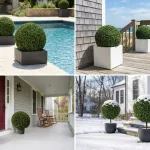
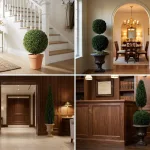
The nine artificial topiary shapes that work hardest
Nine shapes cover most of what people ask us for, from balls and cones to hedges and animals. The right one depends less on taste than on where it will stand. A shape that suits a hallway can look lost on a forecourt.
Here are the nine, and what each is good at.
Three questions to answer before you pick a shape
Settle these first. Shape comes last.
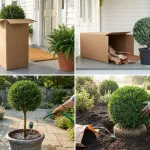
Live, artificial or preserved. A live topiary needs water, light and clipping to hold its shape. An artificial one holds it on its own. Preserved foliage is real greenery treated to stay soft, and it belongs indoors. This page covers the artificial ones.
Indoors or outdoors. Anything that stands outside needs UV-rated foliage. Without it the color fades, and it fades unevenly. The details are in do artificial topiaries fade.
The height you actually have. Measure it first. A spiral that looks right under a twelve-foot ceiling looks very different in a room with an eight-foot one.
1. Ball Topiary
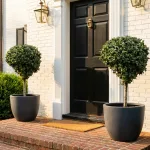
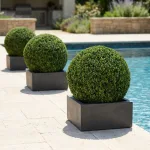
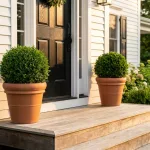
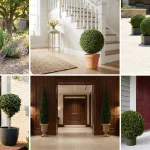
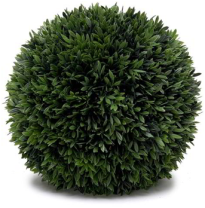
Start with a ball if space is tight or you are not sure which shape to choose. It is the hardest shape to get wrong. A ball takes no more floor than its own width, so it fits where nothing with a spread would: a console table, a narrow hall, a small apartment.
Most artificial balls are made to look like boxwood, but you will also find ivy and cedar. See the artificial balls.
2. Double Ball Topiary
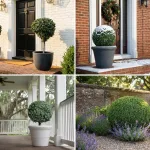
Two balls on one stem give you height without width, so a double ball works in a corner or by a door. A triple has three and goes taller again, usually with the largest ball at the bottom and the smallest on top. Storefronts ask for this shape more than any other in the range.
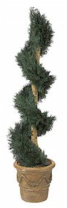
3. Spiral Topiary
A spiral is a cone with a groove cut around it, so it looks lighter than a solid shape. Spirals run tall. That suits a high ceiling, a porch, or a pair on either side of a driveway. A double spiral has two grooves and makes the same effect stronger. See the artificial spirals.
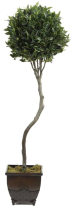
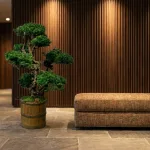
4. Faux Tree Topiaries
A faux tree blends into a room more easily than a clipped shape. Cedar, olive and cypress come with the trunk and crown a real tree would have, and none of the watering. To see how they are put together, read what an artificial topiary form actually is.
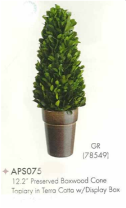
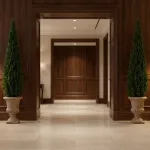
5. Cone Topiary
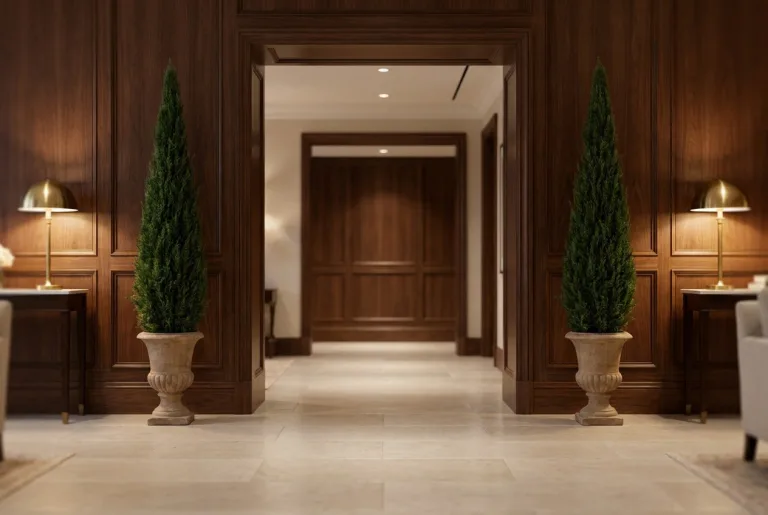
The cone is the most formal shape on the list and the easiest to use in pairs: two by a door, four down a path. It has a wide base and a sharp point. Like a spiral, it gives height without taking floor. It is also the shape people most often decorate at Christmas.
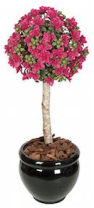
6. Floral Topiary
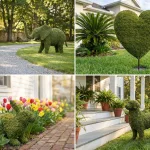
A floral topiary uses faux blooms instead of foliage, usually in a ball shape and sometimes in a looser one. It is the only shape here that brings color instead of green, so it does the most in a neutral room. Use one, not three.
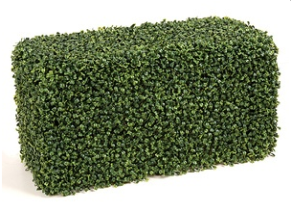
7. Square/Hedge Topiaries
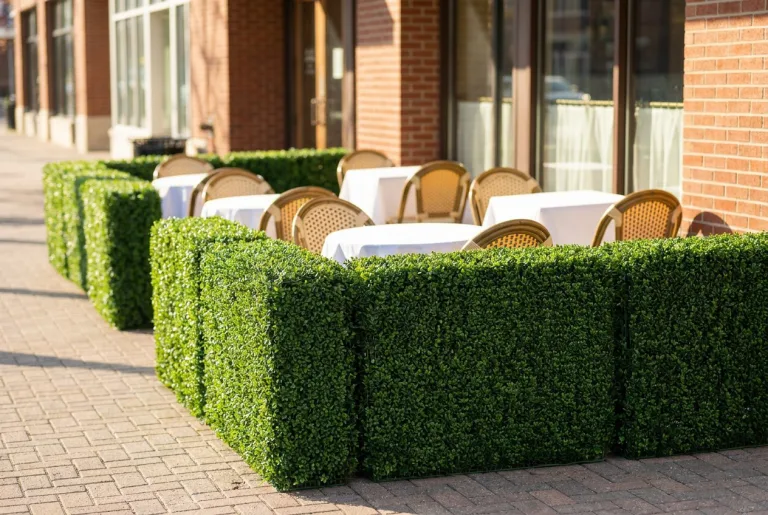
A square looks modern in a way the rounded shapes do not. Stretch it into a rectangle and you have a hedge, which is what most people want it for: blocking a view, marking a boundary, or giving a terrace a wall. Small ones sit well in a window box. See the hedges and shapes.
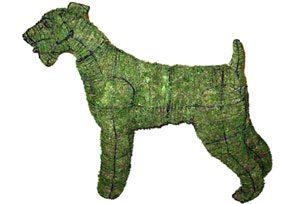
8. Animal Topiary
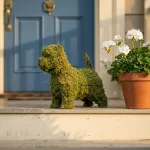
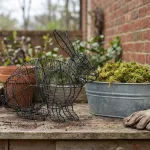
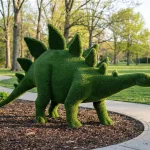
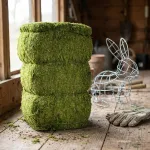
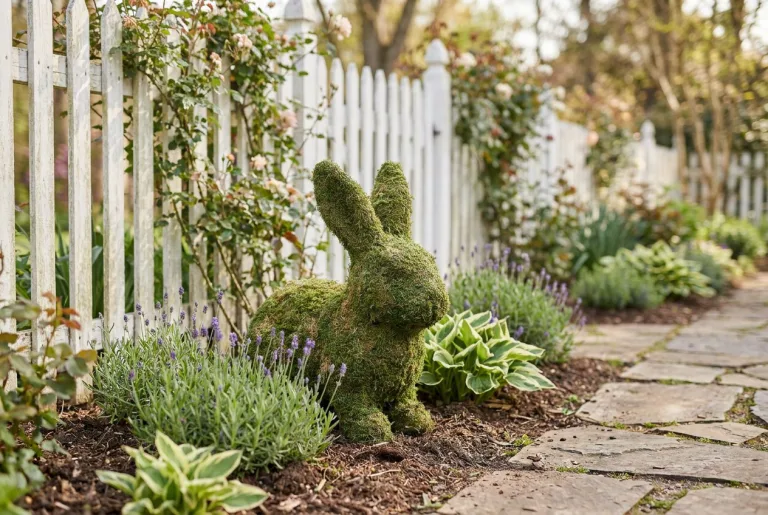
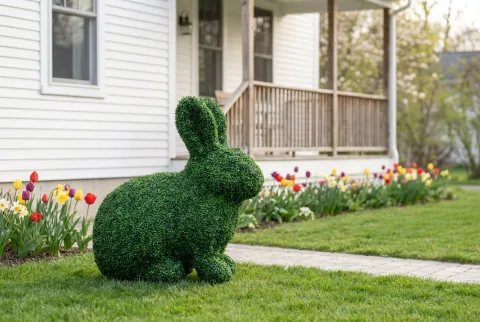
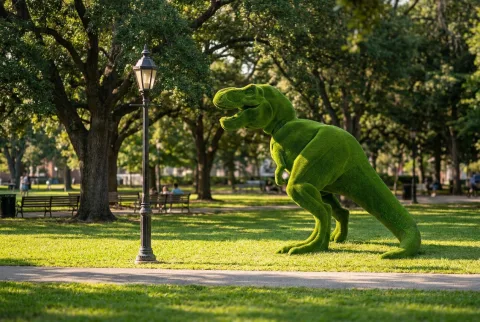
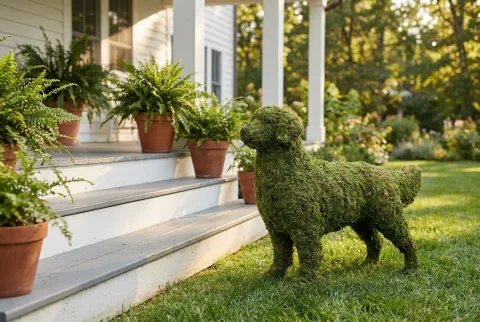
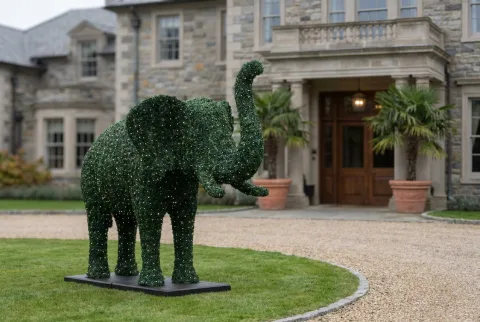
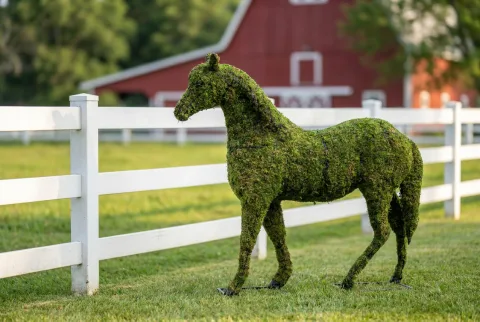
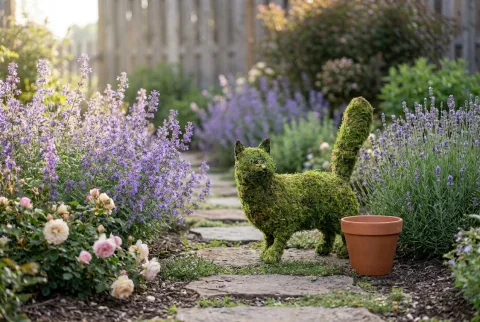
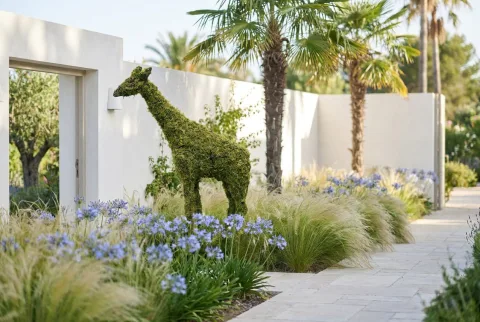
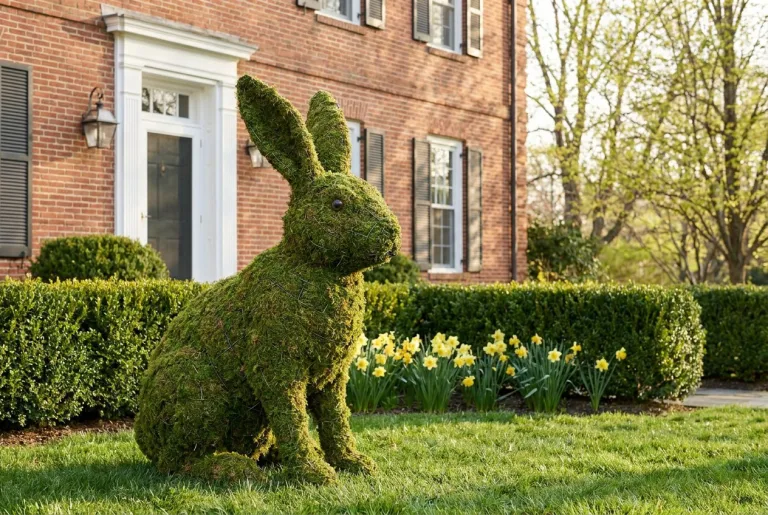
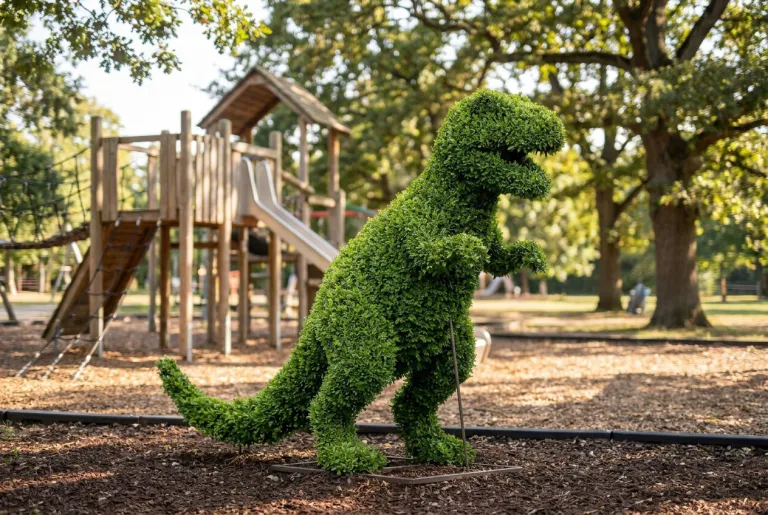
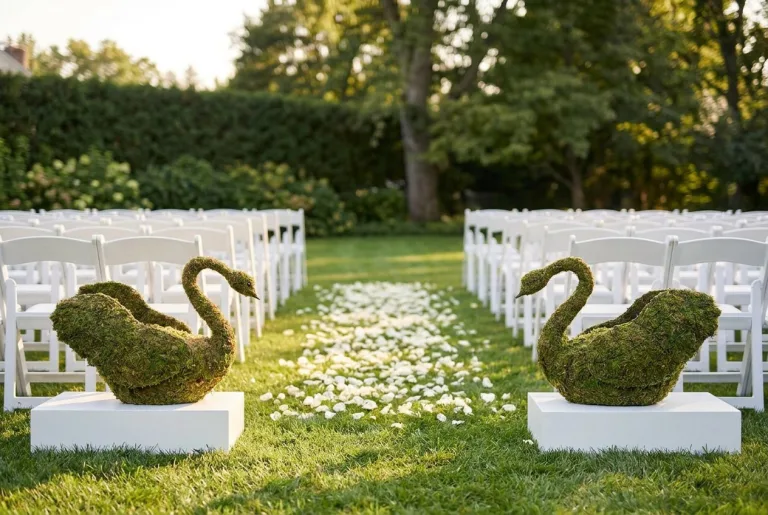
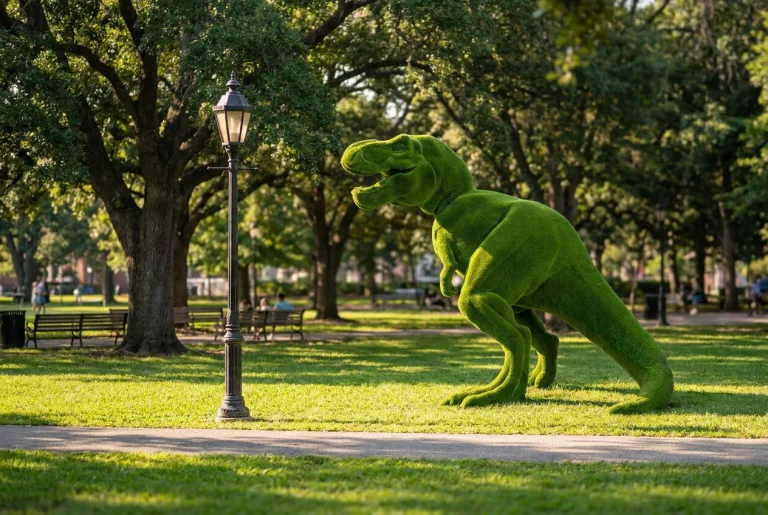
An animal is usually a commission. Elephants, dogs, lions and birds are the most requested, but the frame sets the form, so it can be almost anything. Animals are usually large and usually outdoors. They work inside if the ceiling allows, and one is enough for a room. See what gets commissioned.
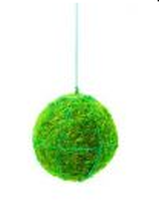
9. Hanging Topiary
A hanging topiary is a ball on a hook in the ceiling or a bracket on the wall. It uses space nothing else in the room is using. That makes it good in an apartment, and good in a stairwell, where there is height but no floor to give up.
What are the benefits of artificial topiaries?
They hold their shape and you do not have to do anything. There is no watering, no trimming, and no worrying about whether a corner gets enough light.
They also ship better. A living plant can arrive stressed after a week in a box and take weeks to settle. An artificial one arrives looking the way it will look.
Good artificial foliage copies the shape, color and texture of the real plant, and from a few feet away it passes. It lasts years with an occasional dusting, where supermarket plastic lasts a season. So the grade of the material matters more than anything else on the label.
Artificial Topiary Decorating Tips
Placement matters more than shape. For a formal look, put two matched pieces on either side of a door or a hallway. For a relaxed one, scatter several small pieces of different heights across a table, with books and pictures between them. Both work, so pick one.
Size it to the room. A large piece can fill a foyer but overwhelm a small sitting room. If one piece is meant to be the focal point, keep what is around it quiet.
If you use several, give them something in common. They do not have to match. But a ball of bright faux flowers next to a muted cedar cone looks like two separate decisions.
For more room-by-room ideas, see 8 artificial topiary ideas for home decorating. If you would rather build a frame yourself, that is covered in make your own wire topiary form.
Featured Image Credit: ractapopulous / Pixabay