










Tree conservation at home means planting trees so they take hold and keeping the ones you have healthy. Four habits do most of the work: mulch 2 to 4 inches deep away from the trunk, water deeply in dry spells, never top a tree, and keep heavy machines off the roots. The US Forest Service and the Arbor Day Foundation explain each step. Your local conservation district or extension office can help with your own yard.
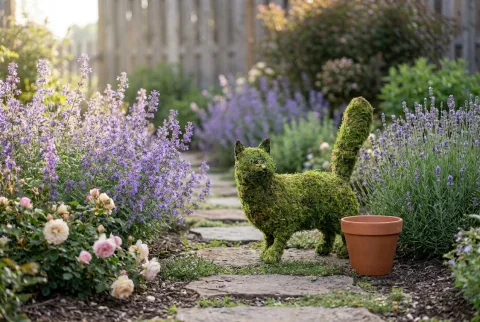
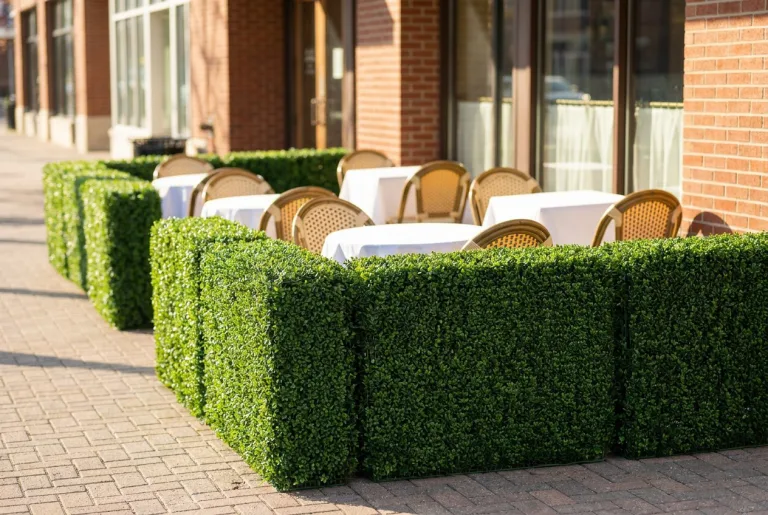
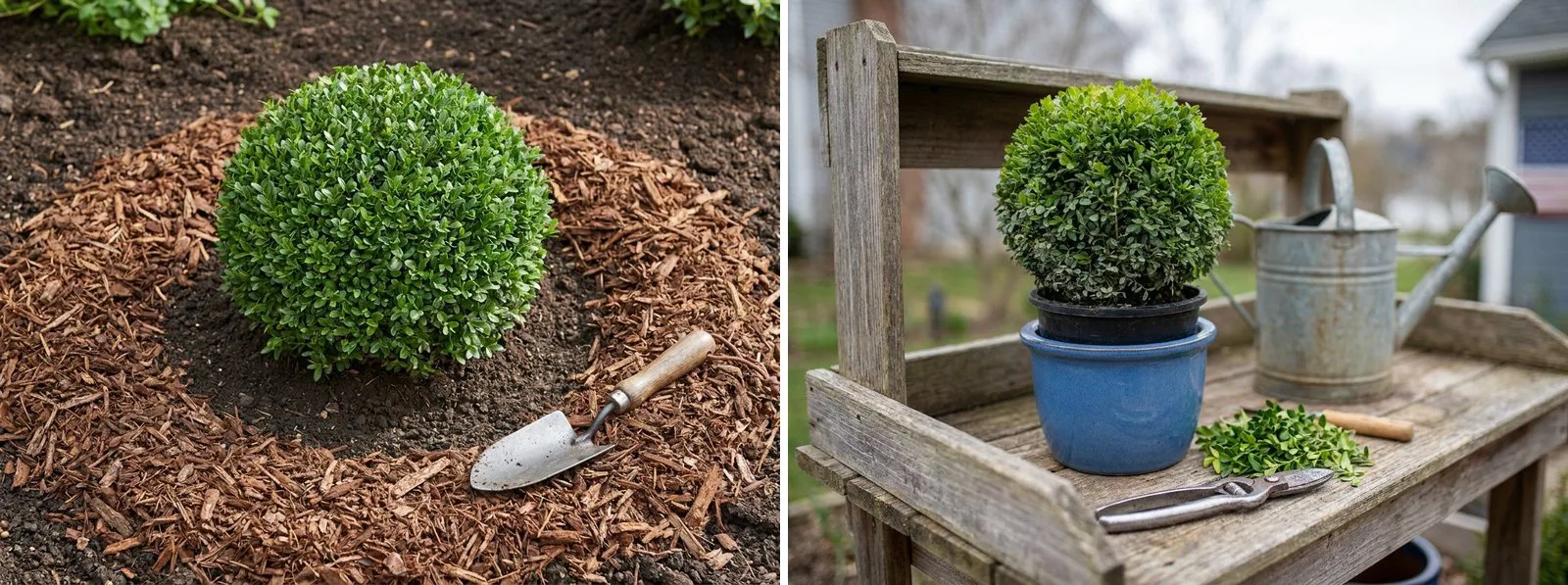
Mulch in a flat ring, kept clear of the stems. The same rule applies around a tree trunk.
What trees do for a home and a town
The US Forest Service says urban forests filter air and water, control storm water, conserve energy, and give animals habitat and shade.
The Forest Service puts numbers on those benefits. Trees placed well can save up to 56 percent on yearly air-conditioning costs. Evergreens that block winter wind can save 3 percent on heating. One hundred mature trees catch about 139,000 gallons of rainwater a year.
How to plant a tree so it takes hold
Call 811 a few days before you dig, to avoid buried utility lines.
Dig a wide, shallow hole. The Arbor Day Foundation says three to four times as wide as the container. The International Society of Arboriculture (ISA) says two to three times as wide as the root ball, and only as deep.
Set the tree so the root collar, where the top roots leave the trunk, sits level with the ground. Most of a tree’s roots grow in the top 12 inches of soil, and ISA warns that planting too deep can harm the tree.
The Arbor Day Foundation advises watering a new tree every day for the first two weeks. After that, water it every three to seven days for the rest of the first year. ISA adds that a new tree needs water more often in hot, windy weather.
How deep to mulch around a tree
Spread mulch 2 to 4 inches deep and keep it off the trunk. The Arbor Day Foundation and ISA both give that depth. ISA says mulch against the trunk can lead to stem girdling roots, which can slow the tree’s growth or kill it.
Clear the grass in a circle about 3 feet around a young tree first. Where you can, ISA suggests carrying the mulch out to the drip line, under the outer edge of the branches.
How to water trees in a drought
Water deeply and less often. The University of Maryland Extension says deep, infrequent watering grows a deep root system that copes better with drought.
In dry weather, University of Missouri Extension advises a deep watering every 6 to 7 days. If water is short, Maryland Extension puts young trees first, then shrubs, then non-woody plants.
Why topping hurts a tree
Topping means cutting a tree’s branches back to stubs to make it shorter. ISA calls it perhaps the most harmful pruning practice known.
Topping can remove 50 to 100 percent of the leafy crown. A topped tree never fully regains its natural form.
If a tree has outgrown its spot, ISA advises leaving the work to people trained and equipped to work safely in trees. Its Find an Arborist directory lists ISA-credentialed tree care professionals.
How to protect tree roots during building work
Heavy machines pack the soil over the roots. ISA says the compacted soil slows root growth and lets less water and oxygen reach the roots.
Before work starts, ask an arborist where to put tree protection fences. Signs on the fences should say why people need to stay out and whom to call to get in.
Trees and hedges as cover for birds
The National Wildlife Federation lists four things a wildlife habitat needs: food, water, cover and places to raise young. Its Certified Wildlife Habitat program sets a goal of 70 percent native plants.
The Federation says evergreen and thorny plants give extra cover, but the key is planting densely.
Birds use that cover to nest and rest. Audubon says many nesting birds prefer dense shrub thickets to open tree canopies, because the thickets protect them from wind, snow and rain. Audubon adds that a hedge on the north side of a house can double as a windbreak.
Where to find help near you
- The conservation district directory from the National Association of Conservation Districts finds your district. Nearly 3,000 districts, almost one in every county, help homeowners and communities plant trees.
- The USDA Service Center locator finds your nearest office of the Natural Resources Conservation Service.
- The Extension Foundation’s state list links to every state’s Cooperative Extension. Extension has an office in or near almost every county.
- The Urban and Community Forestry Program is the only federal program dedicated to community trees and green spaces.
- The Arbor Day Foundation’s planting guide walks through planting a potted tree. Its Tree City USA program recognizes towns that look after their trees.
- ISA’s TreesAreGood.org has brochures on why topping hurts trees, mulching and avoiding tree damage during construction.
- The National Wildlife Federation’s Certified Wildlife Habitat program certifies a yard for a $25 application fee.
- Audubon’s guide to making your yard bird-friendly says shrubs and small trees often give songbirds fruit and nesting sites.
We are a topiary store, not a conservation group. Conservation districts and other sites have linked to this page for years, so we keep its sources current. We last checked every link on 25 November 2026. For the plants we sell, read our topiary care guide.