




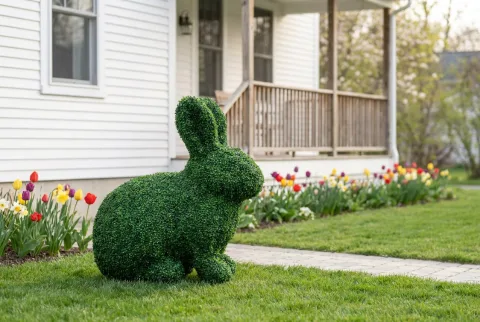

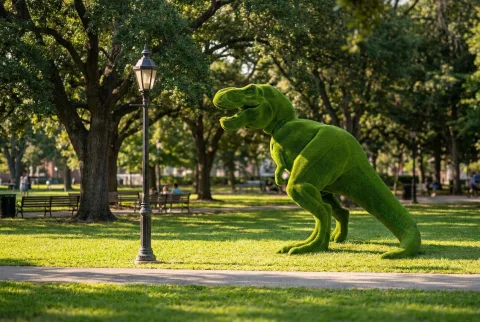
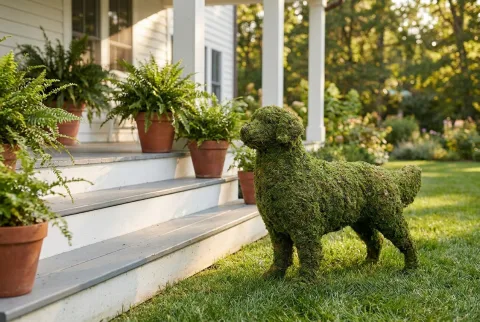
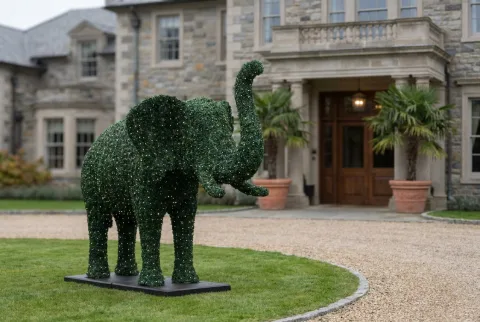





Preserved Moss Topiary
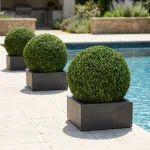
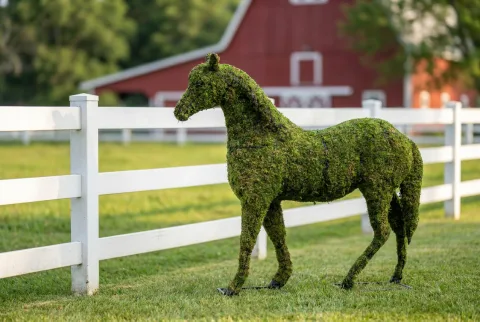
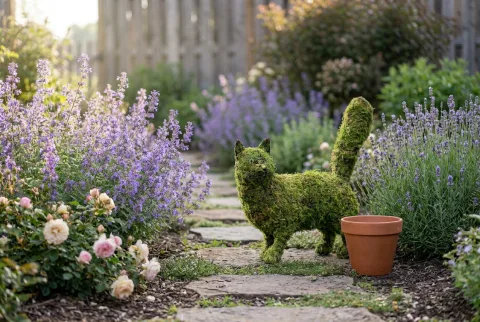
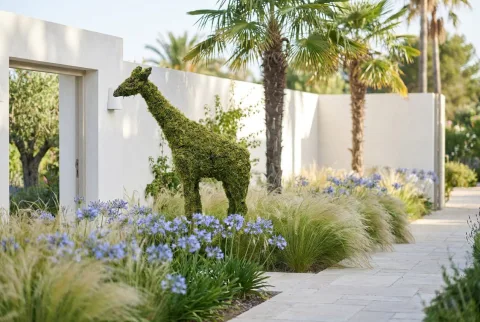
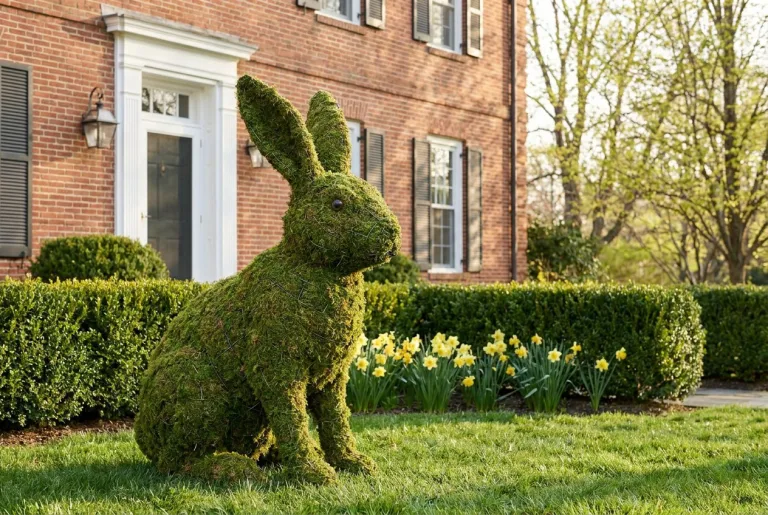
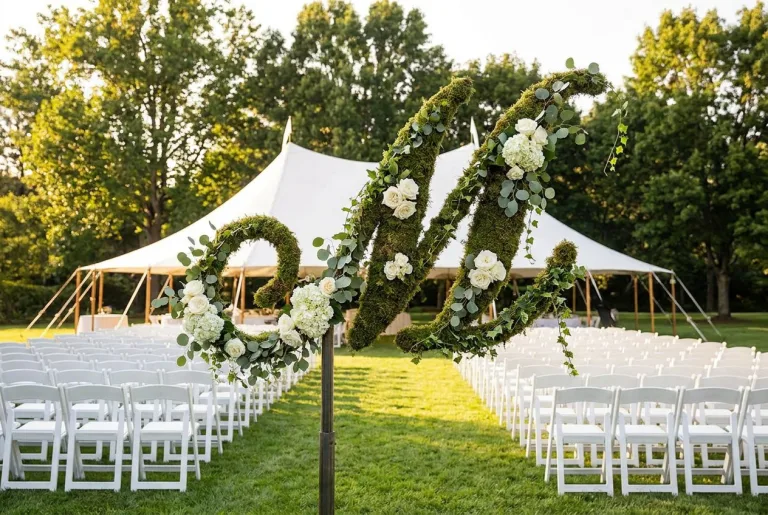
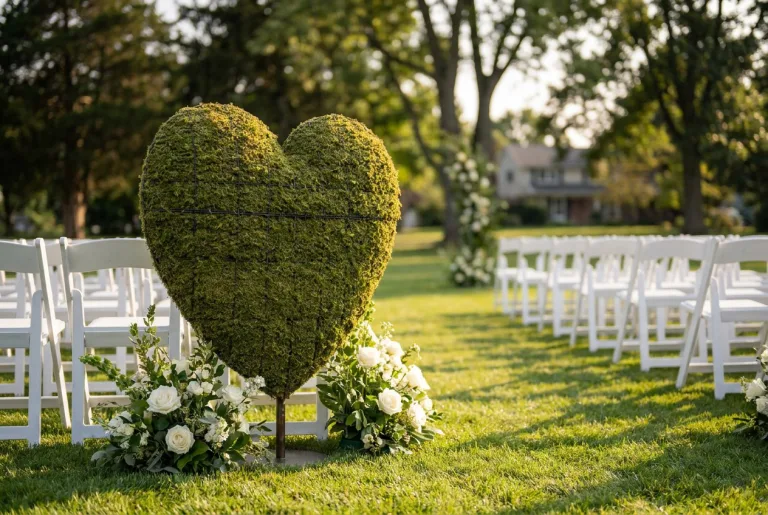
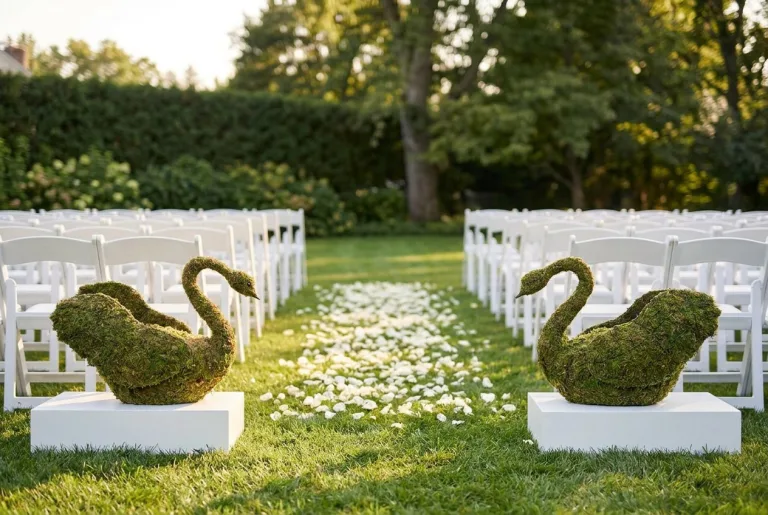
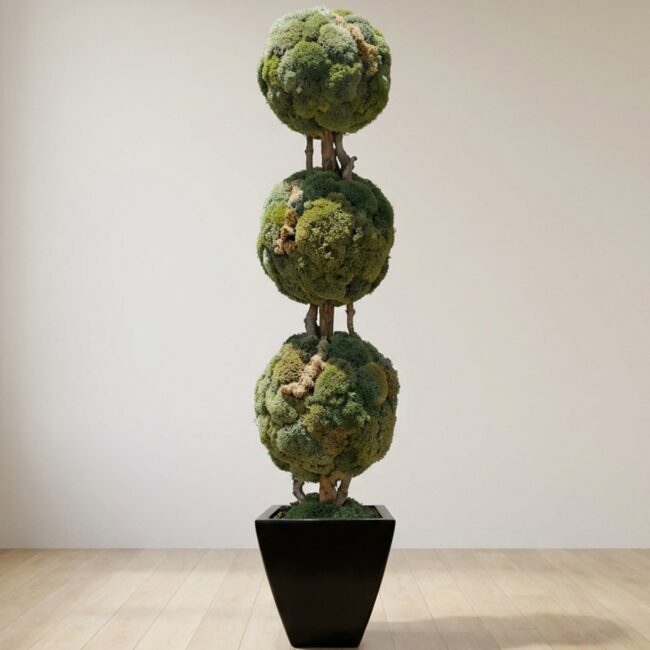
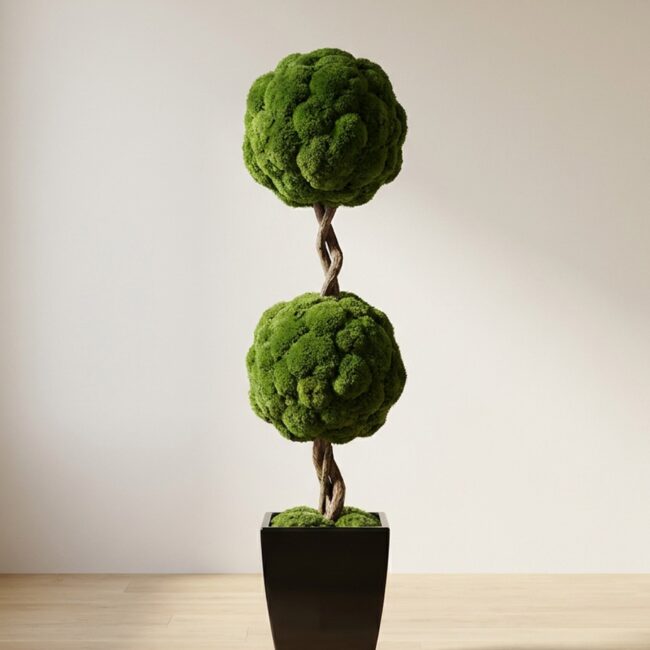
Moss topiary is a soft, rounded alternative to clipped leaves. A moss ball topiary on a natural trunk brings texture to a shelf, a console or a dining table. Preserved moss needs no water or light. It is for indoors only: direct sun fades moss over time. Beyond that, an occasional dusting is all it asks.
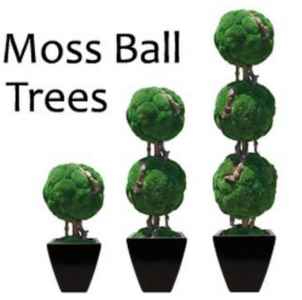

Need a size or shape you don’t see?
Tell us the space and the height. We will suggest pieces and quote them with delivery to your ZIP.
Why choose moss topiary
Moss topiary swaps clipped leaves for a soft, rounded surface with a lot of texture. Preserved moss has no leaves to drop and nothing to trim, so the shape you buy is the shape you keep. It asks for a dry, shaded spot indoors and very little else. The rows cover where a moss ball topiary looks best, what preserved moss is and how to keep it fresh.
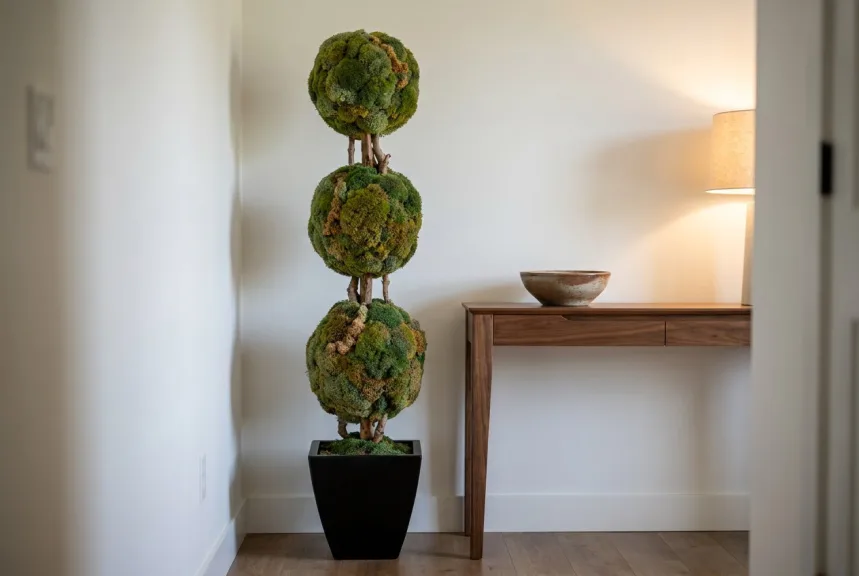
Moss topiary for an entry or dining room
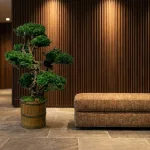
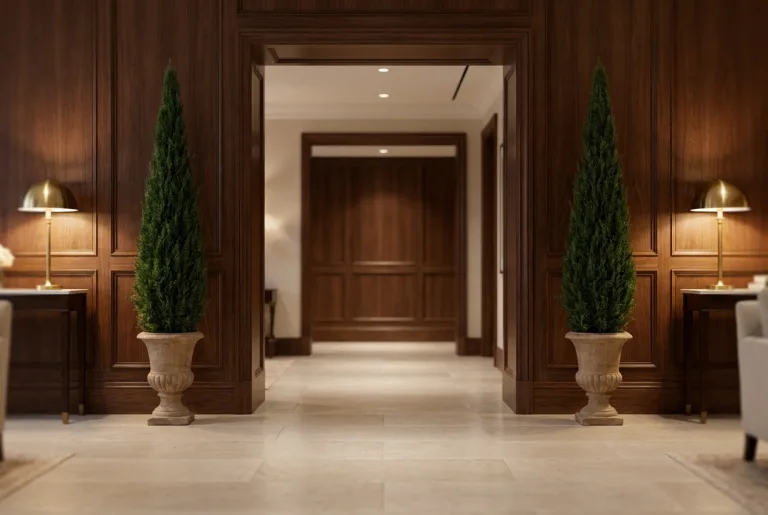
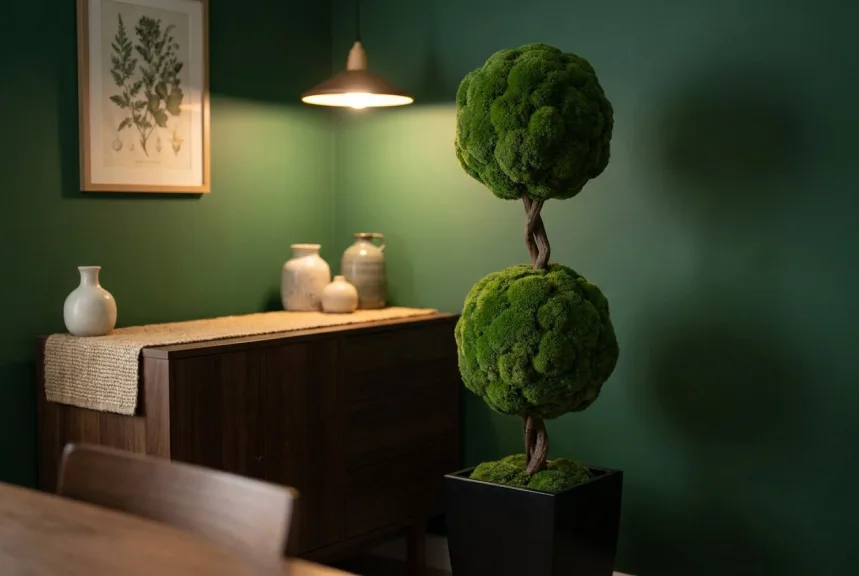
A moss topiary on a trunk brings a soft, rounded shape to a room full of hard lines. It works in an entry, at the end of a dining room or beside a bookcase. Put it where it will be seen but not brushed against.
The mixed greens read from afar. Because the moss is preserved, it keeps its shape without water or daylight. Choose a plain container so the moss stays the focus.
Preserved moss balls, explained
Preserved moss is real moss that no longer grows. The water in it has been replaced with a glycerin solution and the color set with dye, so it stays soft instead of turning brittle.
That has two practical effects. It needs no water or light, and it should never get wet, because water can make the dyes run and invite mold. It also does not bear weight. Do not stack things on a moss sphere or press it, because it flattens.
Keeping moss topiary looking fresh
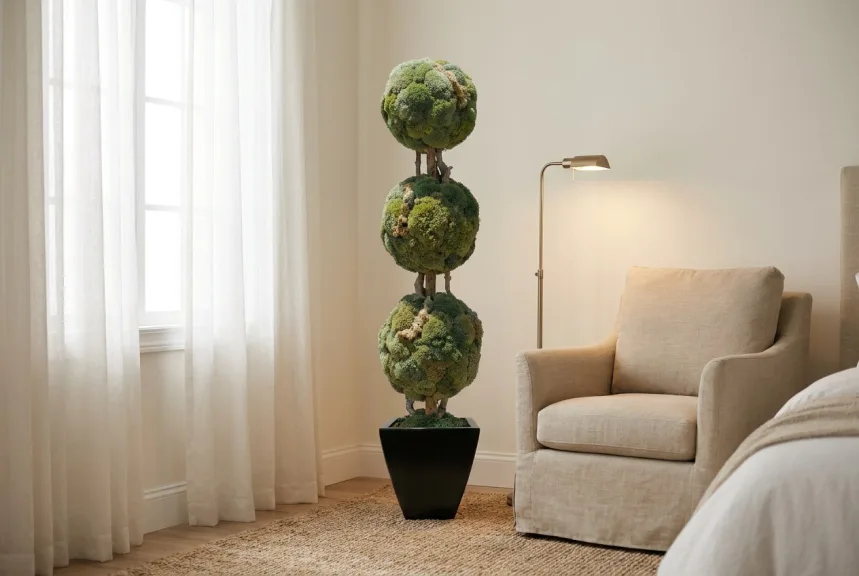
Sun is the main risk. Direct light fades moss, and a bright window counts. Heat comes next: a radiator, a fireplace or a vent blowing on it dries it out.
Keep the room at roughly 40 to 60 percent humidity. Very damp air can make the dyed color transfer onto nearby surfaces, so keep it off a pale wall in a humid spell. Dust it with a hair dryer on the cool setting now and then. Preserved topiary for interiors covers placement.
Questions about Preserved Moss Topiary
Is preserved moss alive?
No. It is real moss preserved with glycerin and colored, so it stays soft without growing. That is why it needs no water, light or trimming.
Does moss topiary need water or light?
No. It needs neither. Water does harm: wetting preserved moss can make the dyes run and encourage mold. Keep it dry and dust it now and then.
Can moss topiary go outside?
No. Preserved moss is for indoor rooms. Rain, outdoor damp and direct sun all shorten its life, and nothing preserved is guaranteed outdoors. For a porch or a garden, look at artificial topiary.
How long does preserved moss topiary last?
Years, indoors. Kept dry, out of direct sun and away from heat, preserved moss holds its texture and color for a long time. Sun fades it fastest.
What is a moss ball topiary?
A ball of moss set on a stem or a trunk, usually in a pot or a container. It gives the round shape of a clipped ball without any clipping.
How long does delivery take?
Allow 1 to 3 weeks for it to ship, because each piece is finished to order. We ship across the US and Canada. You have 15 days after delivery to return a piece; refuse a shipment that arrives damaged.