
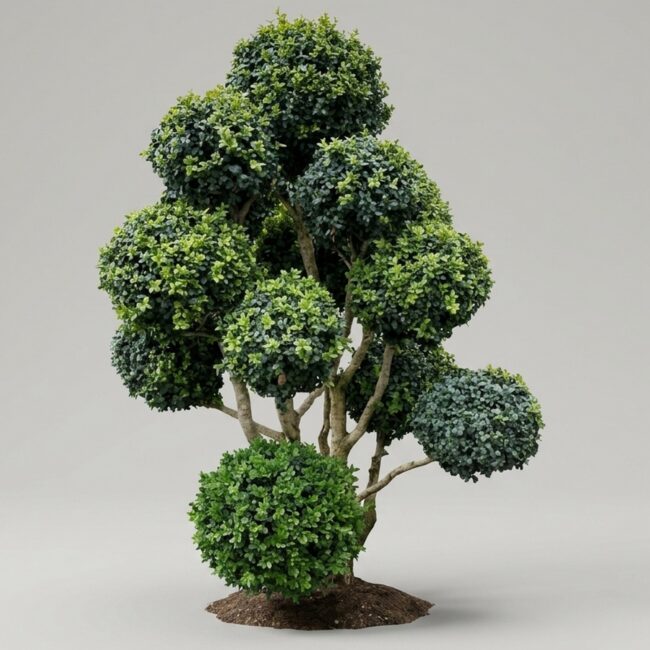
Live Boxwood Topiary Plants & Trees
Boxwood Poodle Topiary, Buxus ‘Rotundifolia’, 4-5 Ft
Price Upon Request
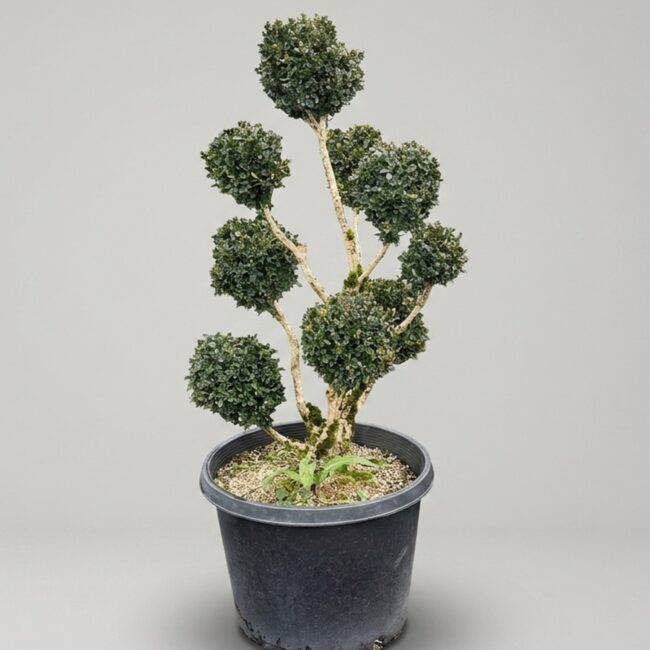
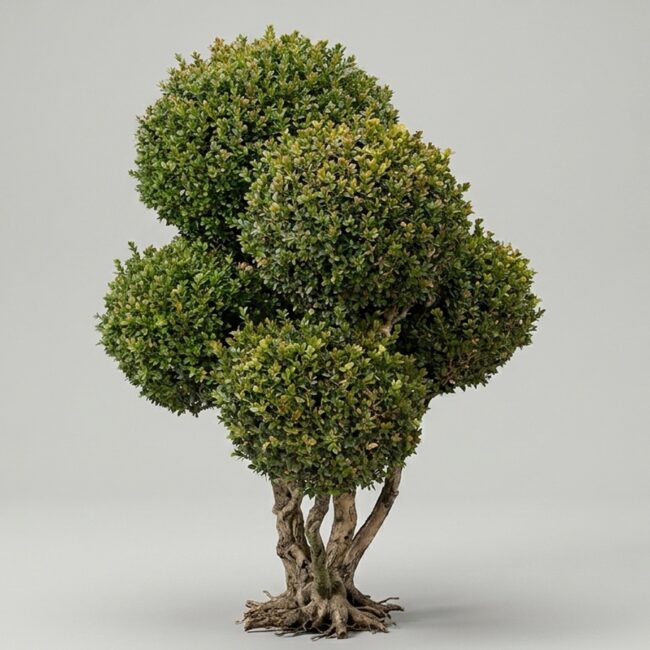
Welcome to our exclusive collection of live boxwood pom‑pom topiaries—premium, hand‑crafted living sculptures designed to bring height, character, and architectural elegance to any outdoor space. Each pom‑pom topiary in this category is shaped by skilled growers who specialize in creating crisp, perfectly rounded globe tiers supported by strong, well‑structured stems. The result is a striking, multi‑level design that adds movement, dimension, and visual interest to landscapes of all styles.
Learn more about this topiary, care, and receiving your plant for longevity
Whether you’re enhancing a residential entryway, designing a formal garden, or elevating a commercial property, these pom‑pom topiaries offer a refined, sculptural presence that stands out year‑round.
Premium Craftsmanship and Exceptional Plant Quality
Our live boxwood pom‑pom topiaries are cultivated from high‑quality boxwood varieties known for their dense foliage, rich evergreen color, and naturally compact growth habit. Each plant is:
- Hand‑trimmed for precision, ensuring clean, symmetrical globe tiers
- Grown in nutrient‑rich soil blends that support long‑term health
- Shaped over multiple seasons to achieve a strong structure and balanced form
- Container‑grown for easy transplanting into pots or landscape beds
This level of craftsmanship ensures that every pom‑pom topiary arrives ready to make an immediate impact.
A Sculptural Accent for Any Landscape Style
Pom‑pom topiaries are prized for their ability to create height and rhythm in outdoor spaces. Their tiered structure draws the eye upward, making them ideal for:
- Framing front doors, walkways, and gates
- Adding vertical interest to patios and courtyards
- Creating focal points in formal gardens
- Enhancing hotel, restaurant, and retail entrances
- Balancing symmetrical landscape designs
- Elevating modern, minimalist outdoor décor
Their evergreen foliage ensures year‑round beauty, even in the winter months when other plants fade.