
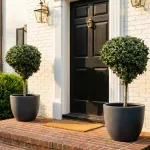
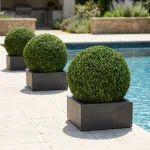
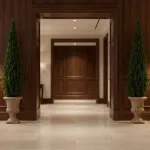
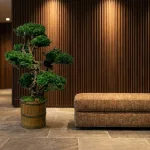
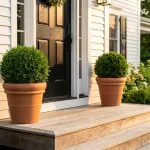
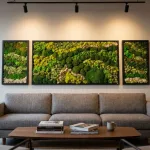
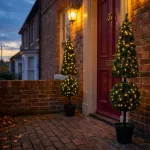
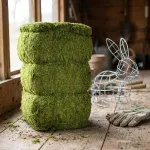
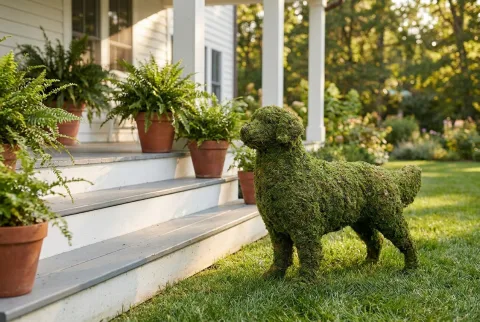
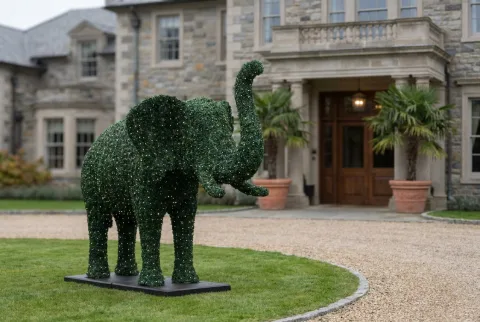
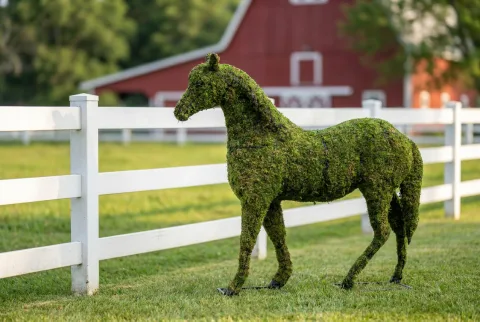
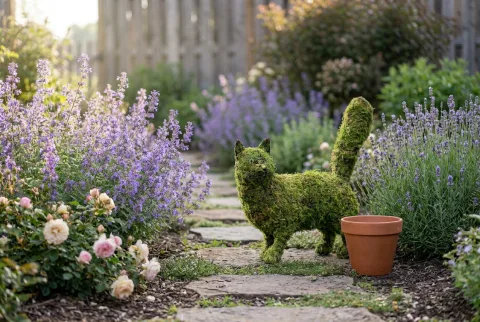
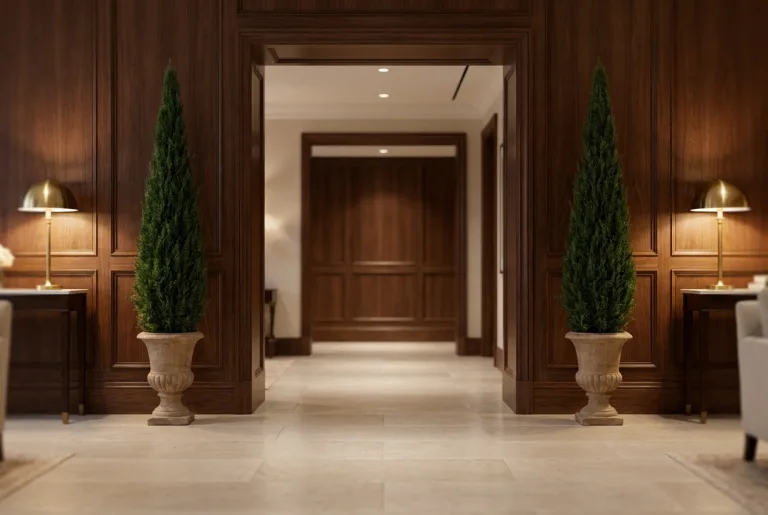
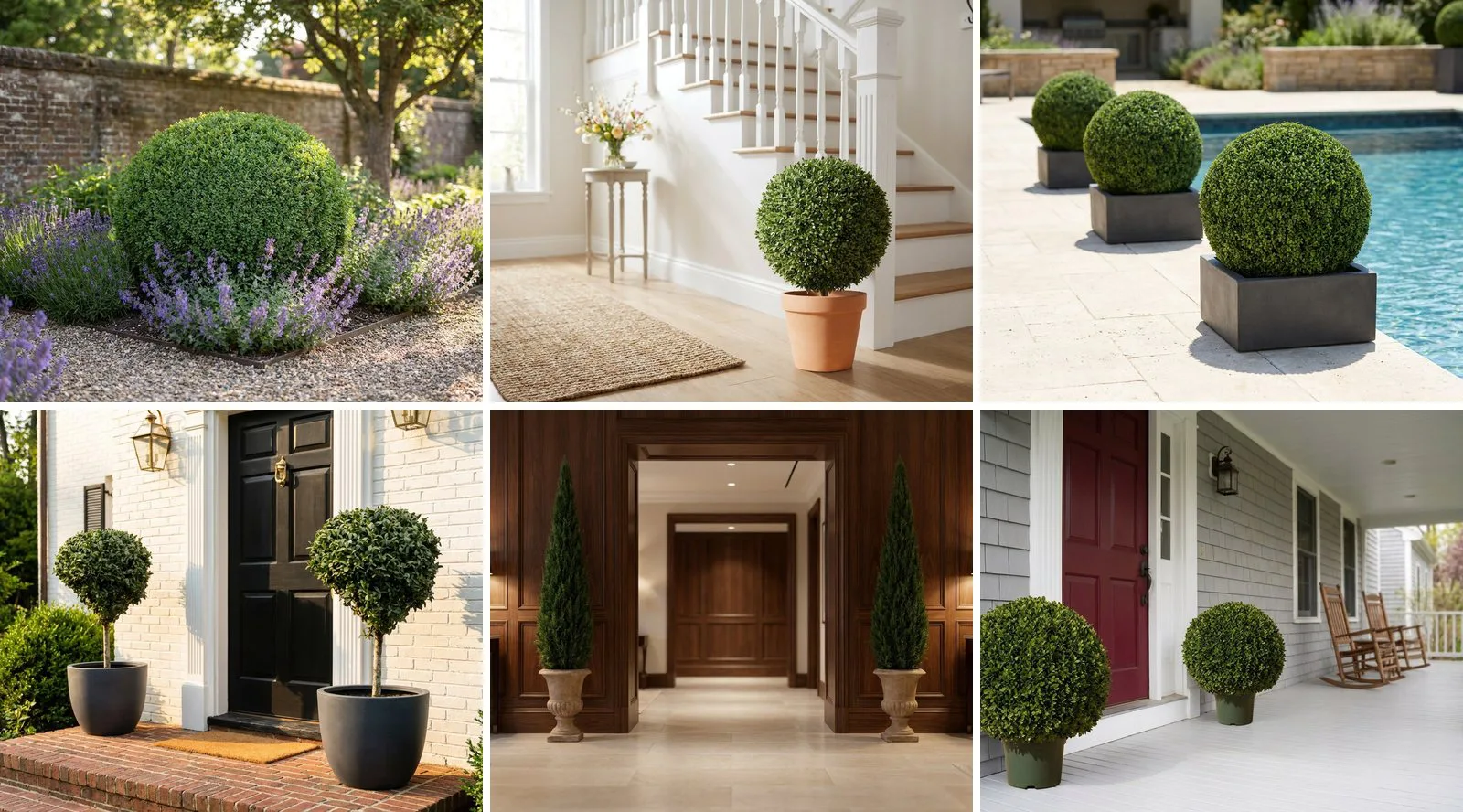
Outdoors, a UV-rated artificial topiary lasts longest with the least work, and a live boxwood planted in the right zone can last for decades if someone waters and trims it. Preserved topiary does not belong outdoors at all, because sun fades it and damp breaks it down. So for a porch or a garden, the real choice is live or artificial, and the spot decides it.
Below is the same shape, a boxwood ball, compared across all three materials: what it costs to buy, how much care it takes each year, how long it lasts in sun, and where each one suits.
One ball, three materials
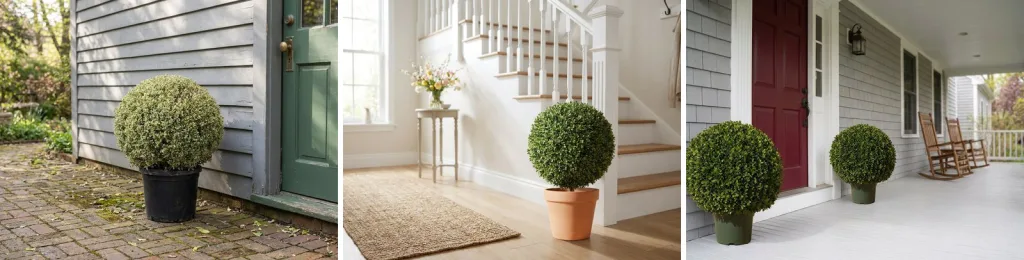
Live boxwood is a growing plant. It changes with the seasons, puts out soft new growth in spring and needs trimming to hold its shape. Preserved boxwood is real foliage that has been treated with glycerin. It keeps real leaves and a soft feel, but it no longer grows and it cannot take weather. Artificial boxwood is molded plastic leaves on a frame. It never changes shape, and a UV-rated grade holds its color outdoors for years.
What each one costs up front
Here is a ball of about two feet in each material, at our catalog prices in September 2026.
| Ball of about 2 feet | Price |
|---|---|
| Live boxwood ball, 24 to 27 in | $325 |
| Artificial, UV-rated, 24 in | $595 |
| Artificial, full outdoor grade, 24 in | $860 to $899 |
| Preserved ball, 30 in (indoors only) | $450 |
At the same size, live boxwood costs the least to buy, and a full outdoor grade artificial ball costs the most. Across the whole range, our live boxwood balls run from $155 for a 12 to 15 inch globe to $450 for a 43 to 45 inch ball. Artificial topiary balls run from $98 for a 10 inch ball to $1,010 for a 30 inch one. Preserved balls start at $450.
How much care each one needs in a year
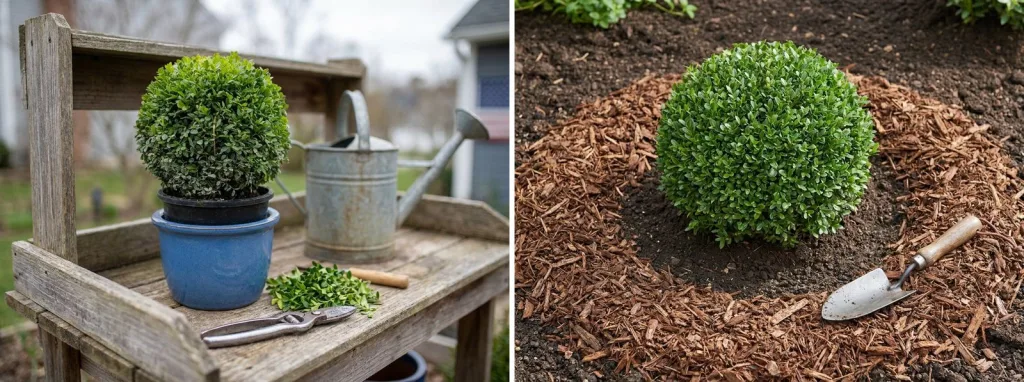
| Task | Live | Artificial |
|---|---|---|
| Water | Weekly in dry spells, pots every day or two in summer | None |
| Feed | Early March and October | None |
| Trim | Early June, light tidy by early September | None |
| Clean | None | Dust or rinse a few times a year |
| Winter | Water until the ground freezes, wrap exposed pots | Weight the pot, brush off heavy snow |
Preserved topiary needs no water, light or feeding, only a dusting now and then. For the live boxwood routine in full, see the boxwood topiary care guide for USA zones. For artificial pieces, see how to keep artificial topiary from fading.
So the cost over time works out like this. Live costs less to buy and more in time and upkeep, or a landscaper’s visits. Artificial costs more to buy and almost nothing after. Where nobody will water, artificial is the cheaper choice over a few years. Where someone enjoys the garden, live is the better value.
How long each one lasts in sun
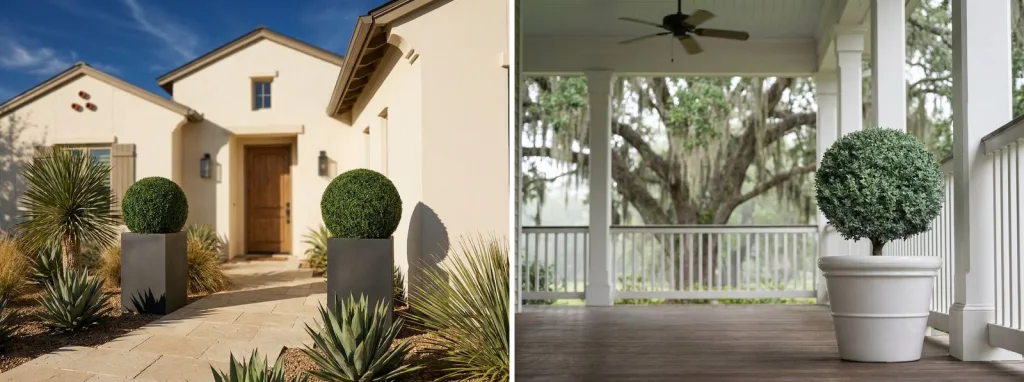
| Material | Lifespan outdoors |
|---|---|
| Live boxwood | Decades in its zone, with care |
| Artificial, full outdoor grade | About 3 to 5 years in hard southern sun, longer in the north |
| Artificial, lighter UV grade | Color starts to fade after about 2.5 years in all-day sun |
| Preserved | Not for outdoors. Around 7 years indoors |
Live boxwood lives for decades in USDA zones 5 to 8, but hard sun limits it. In the dry heat of Texas and the Southwest, and in humid Gulf Coast summers, it struggles in full afternoon sun. Our full outdoor grade UV boxwood ball carries a 5-year fade warranty. Preserved topiary fades unevenly in any sun and breaks down in damp, so it stays indoors.
Which handles harsh weather better?
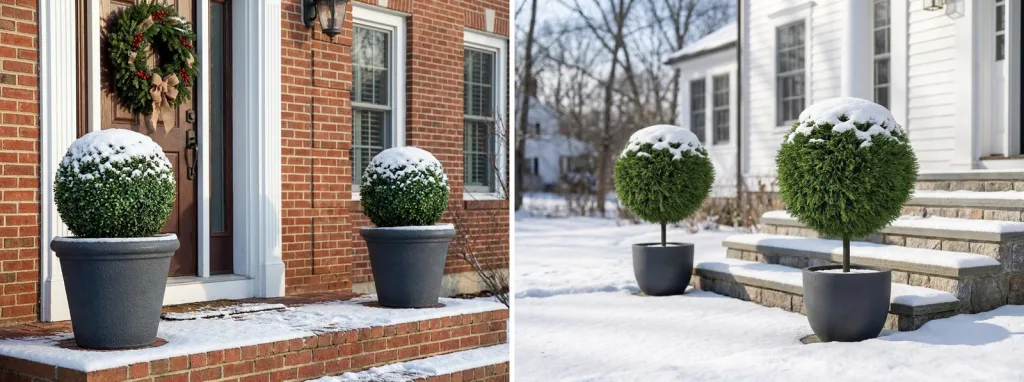
In cold, both do well. Live boxwood in its zone survives winter if it goes in well watered and out of the prevailing wind. A pot gets about one zone colder than the ground, so wrap exposed pots. Artificial foliage does not freeze or dry out, so snow and frost do not harm it. Weight the pot so wind cannot tip it.
In heat, drought and wind, artificial wins. Rooftops, windy forecourts, south-facing walls, holiday homes and anywhere a hose cannot reach are hard on a live plant and easy on a UV-rated artificial piece.
Where each one suits
Live boxwood
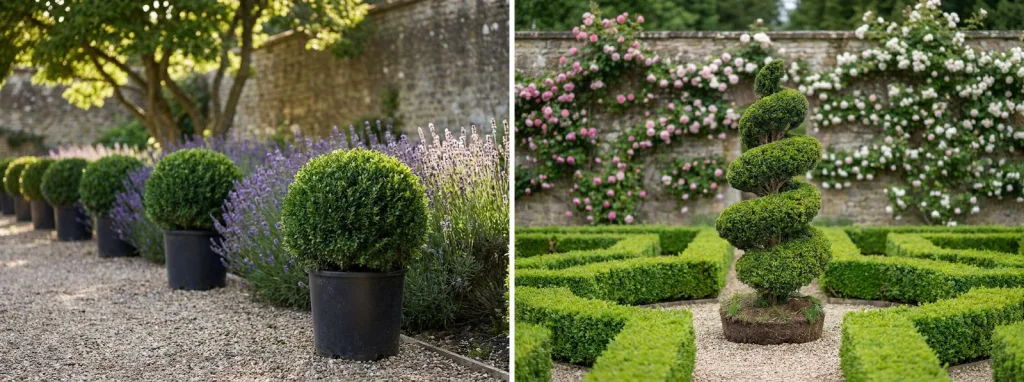
Choose live boxwood for garden beds, borders and front doors with some shade, in a zone where boxwood grows, when someone will water and trim it. It is the only one of the three that grows, fills out and changes with the seasons. Browse live topiary.
Artificial topiary
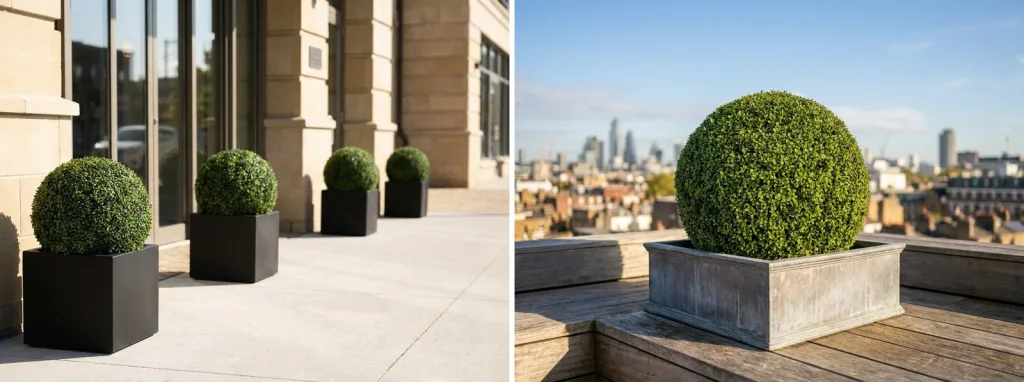
Choose artificial for full sun, rooftops and balconies, commercial frontages, second homes and any spot nobody will water. Buy the full outdoor grade for all-day sun and the lighter UV grade for part shade or a covered porch. Browse outdoor artificial topiary.
Preserved topiary
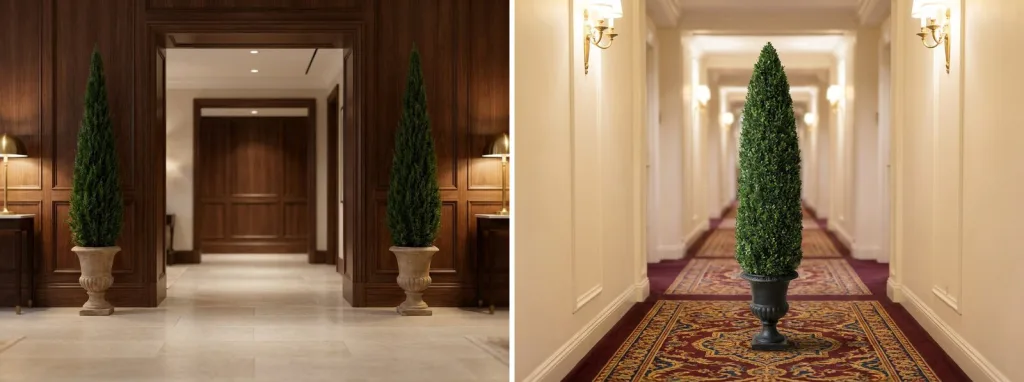
Choose preserved for indoor spots with little or no daylight: a front hall, a hotel corridor, an office lobby. It gives you real leaves with no watering. It is not for porches or gardens. Read preserved topiary for interiors.
Which looks most realistic?
Live and preserved are real leaves, so up close they win. A good artificial piece holds up from a few feet away. Look for leaves in more than one shade of green, dense tips that hide the frame, and a matte finish rather than a shine. How to tell good artificial topiary from bad has the full checklist.
Quick answers
Is artificial topiary cheaper than real?
Not to buy. A 24 inch artificial ball costs $595 to $899 in our catalog, against $325 for a live boxwood ball of about the same size. Artificial becomes the cheaper choice over a few years where a live plant would need watering, feeding and trimming paid for or done by you.
Can artificial cedar balls handle extreme weather?
Yes. Cold, snow and heat do not hurt them. Weight the pot for wind and brush off heavy snow. Our UV cedar balls are the lighter UV grade, so give them part shade rather than all-day sun.
What is the best faux topiary for outdoors?
A full outdoor grade piece with UV protection mixed into the material and a warranty that covers color. For part shade or a covered porch, the lighter UV grade is enough.
Can preserved topiary go outside?
No. Sun fades it and damp breaks it down. Use artificial outdoors and keep preserved pieces inside.
Still deciding? Send us a photo of the spot and its rough size through our contact page, or call 866-306-1020. Our team replies within hours, usually the same day, and will say which material fits, including when the answer is live boxwood. Landscapers and designers can ask about trade pricing.