
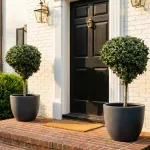
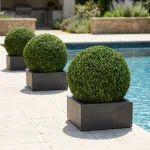

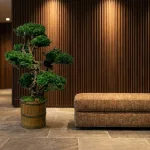
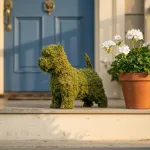



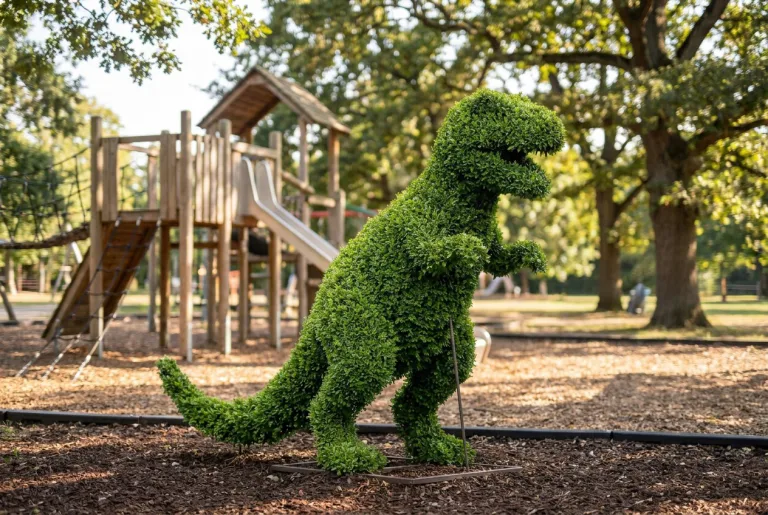
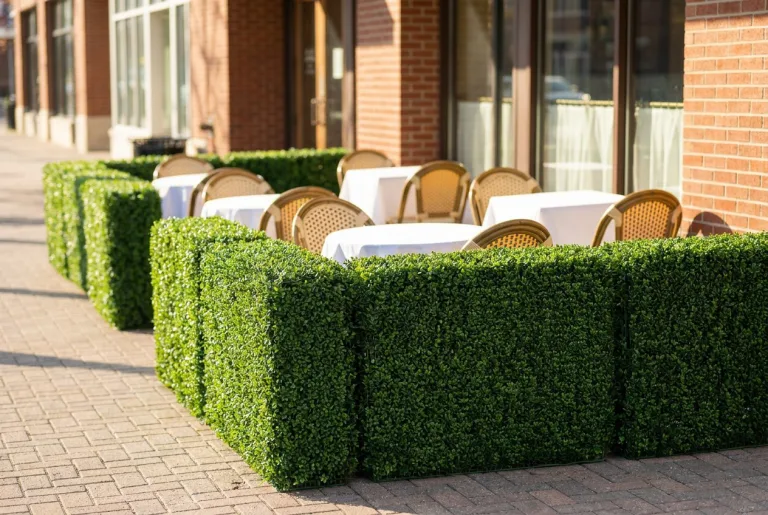
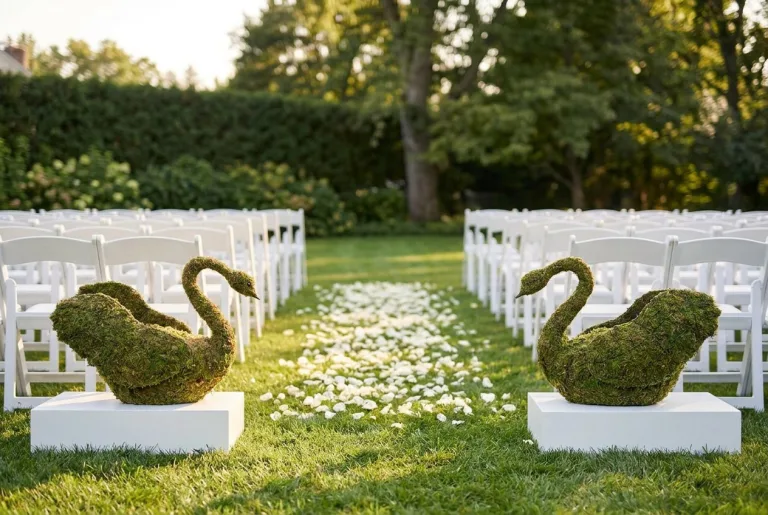
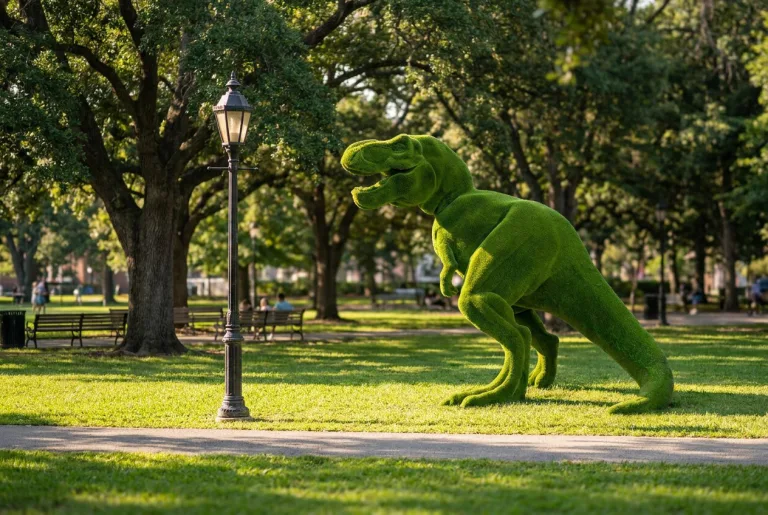




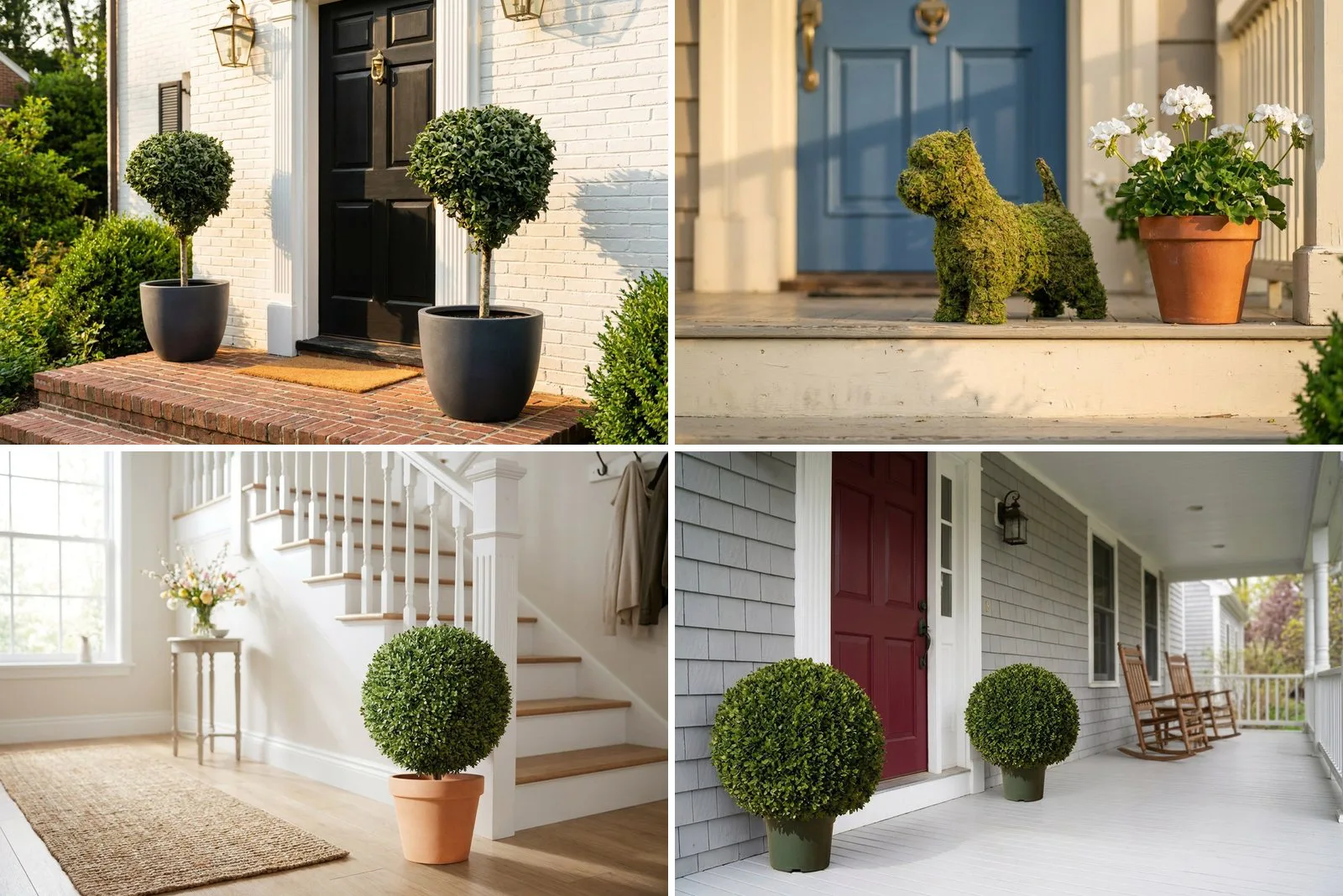
Topiary care depends on what your topiary is made of. A live boxwood needs deep watering, a feed twice a year and two trims. A mossed frame needs its moss kept damp. Preserved and artificial topiary need little more than dusting and the right spot.
Find your material below. Each section gives the one rule that matters most, then links to the full guide.
Which kind of topiary do you have?
| Material | How to tell | Main care |
|---|---|---|
| Live boxwood | Grows in soil and puts out new shoots in spring | Water, feed, trim |
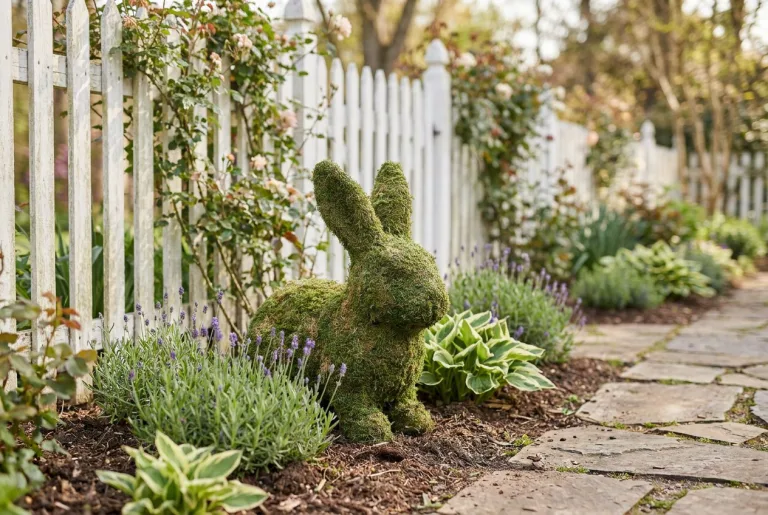
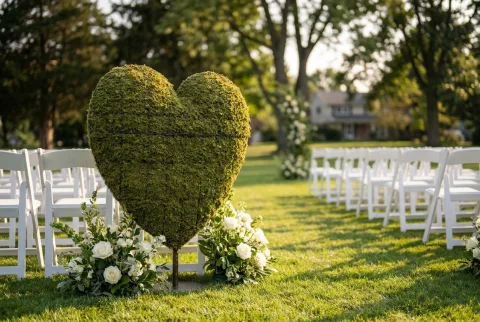
| Mossed | Green sphagnum moss packed over a wire frame | Keep the moss damp |
| Preserved | Real leaves that feel soft but never grow | Keep it dry and out of sun |
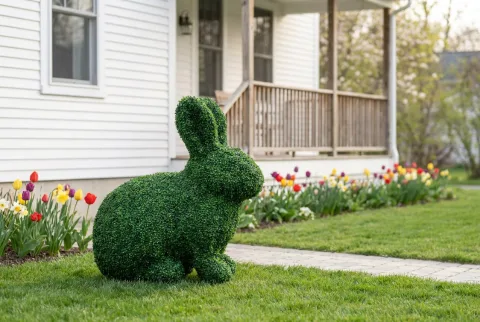
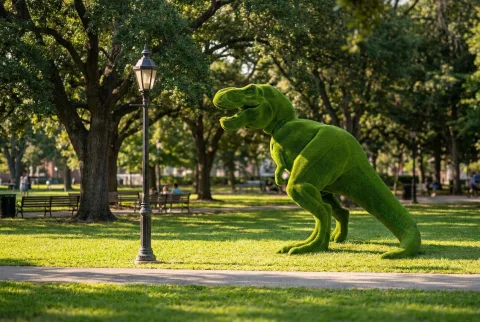
| Artificial | Molded leaves on a frame, no soil | Clean it, and buy a UV grade for sun |
Live boxwood topiary
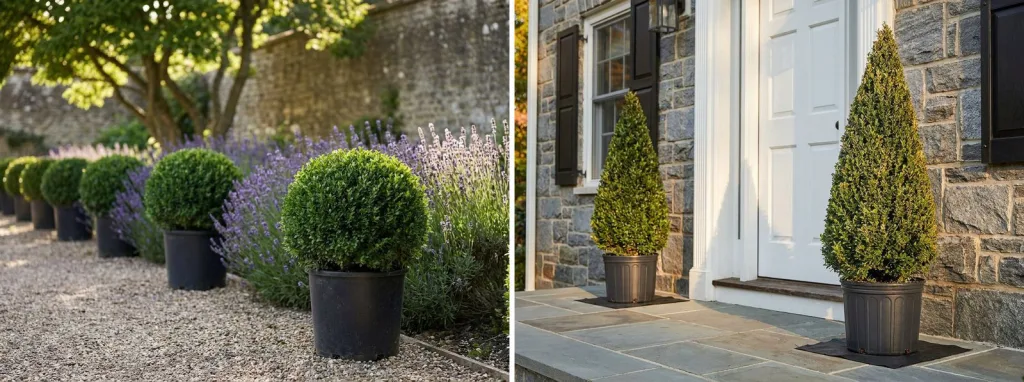
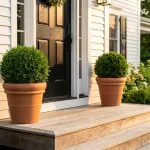
The rule: water deeply, then let it drain. Give about an inch of water a week in dry spells, and check pots every day or two in summer. If the top inch of soil is still damp, wait. Daily sips kill more boxwood than drought does.
Feed with a balanced 10-10-10 or 14-14-14 in early March and again in October. Make the main trim in early June, once the spring growth has firmed. A light tidy in late summer keeps the outline sharp, but finish it by early September so new growth can harden before frost.
Most boxwood grows in USDA zones 5 to 8. The full guide, with cultivars by zone and what each region does to a boxwood, is the boxwood topiary care guide for USA zones. Just received a plant? Read receiving your live topiary. Spots or dieback? Check boxwood diseases before you treat anything.
Mulch: one inch, clear of the stems
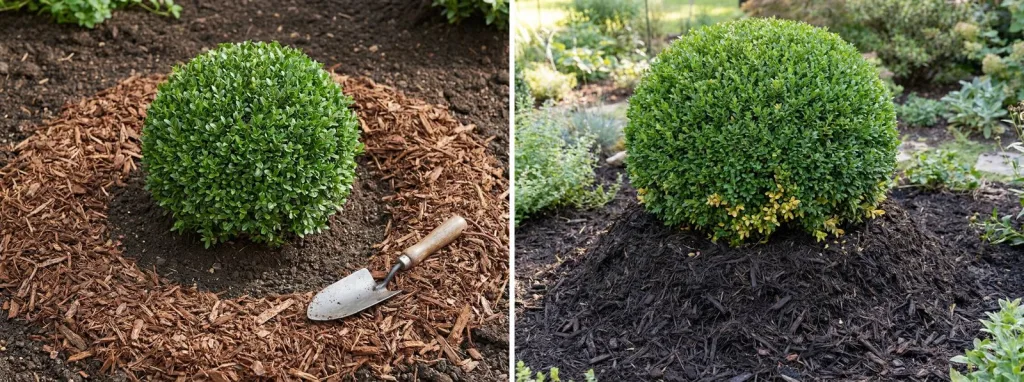
Spread about one inch of mulch in a ring and keep it a couple of inches away from the stems. It keeps the shallow roots cool and moist. Never heap mulch or soil against the trunk. A mulch volcano keeps the bark wet and invites rot, and it is the most common boxwood mistake.
Winter
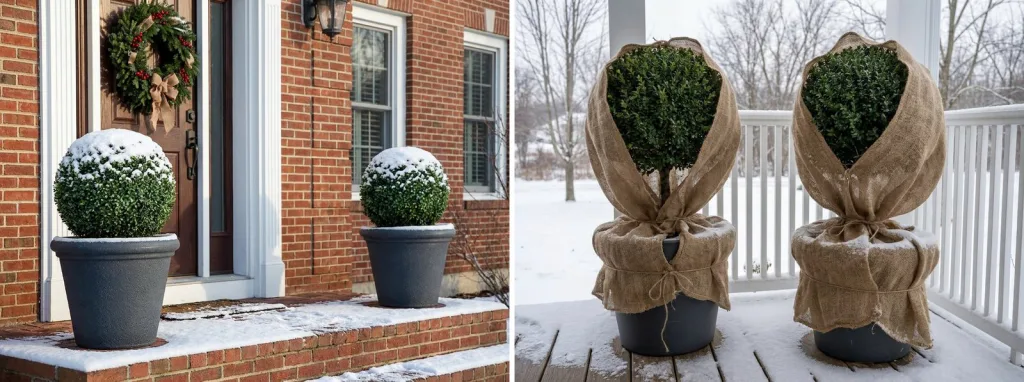
Keep watering deeply until the ground freezes. A boxwood that goes into winter dry comes out of it brown. A root ball in a pot gets about one zone colder than one in the ground, so wrap exposed pots in burlap or move them into an unheated garage during hard freezes. Orange or bronze leaves on the sunny side are winter bronzing, and they green up again in spring.
Growing boxwood in a container? The details are in boxwood in a planter.
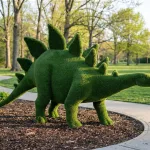
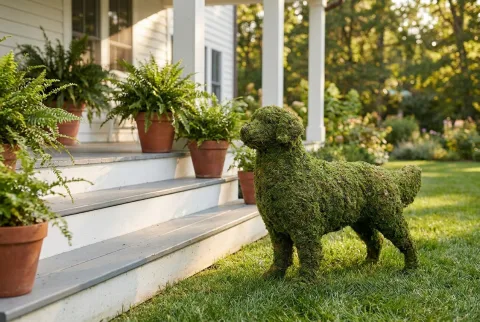
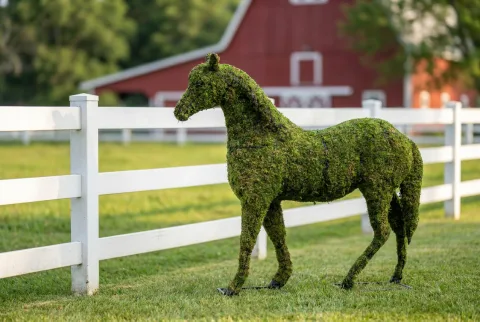
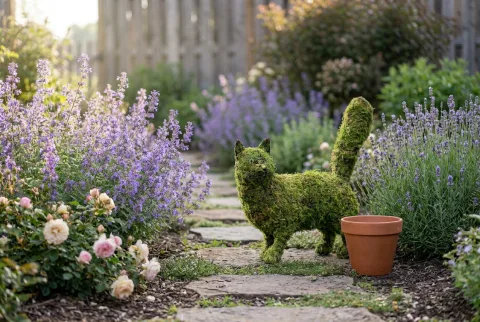
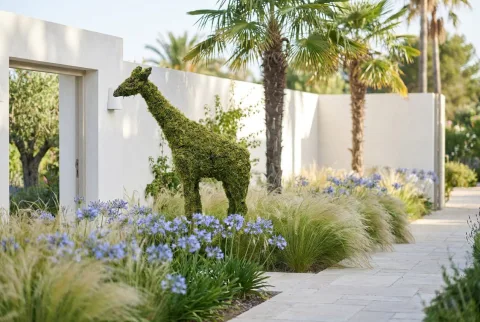
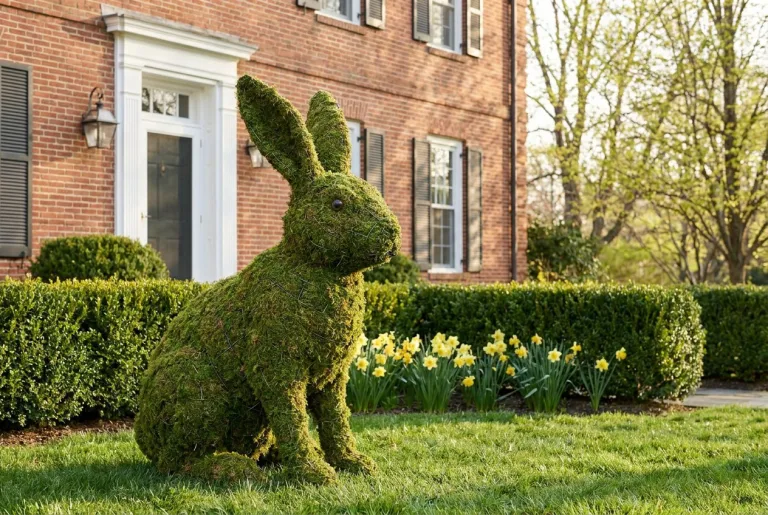
Mossed topiary
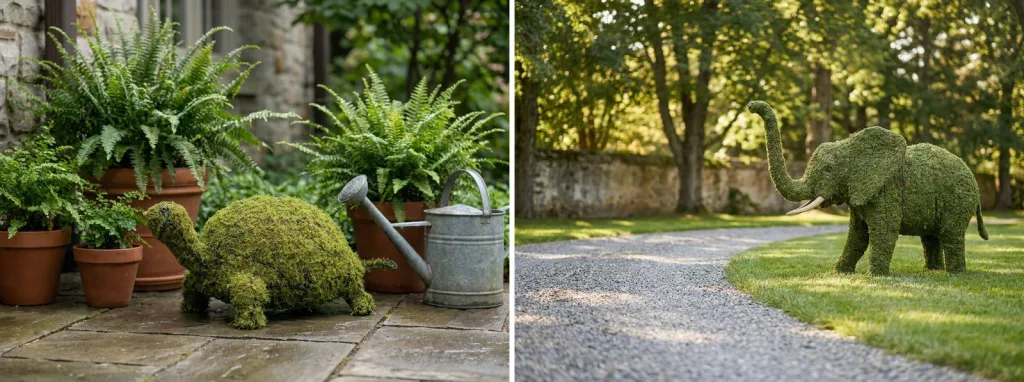
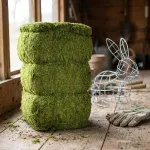
The rule: water as soon as the moss feels dry, but never leave it soggy. Sphagnum moss holds a lot of water, but it dries quickly in heat and wind. For a small piece, rinse it at the sink until the moss is evenly damp, then let it drain. For a large one, water slowly with a hose on a gentle setting until the water runs through.
Keep mossed pieces out of full afternoon sun. A covered porch or a spot in bright shade suits them best. Mist between waterings in hot weather. If the piece is planted with ivy or other plants and their leaves turn pale and yellow while the moss is wet, water less, because the roots are short of air.
Refresh the moss once or twice a year
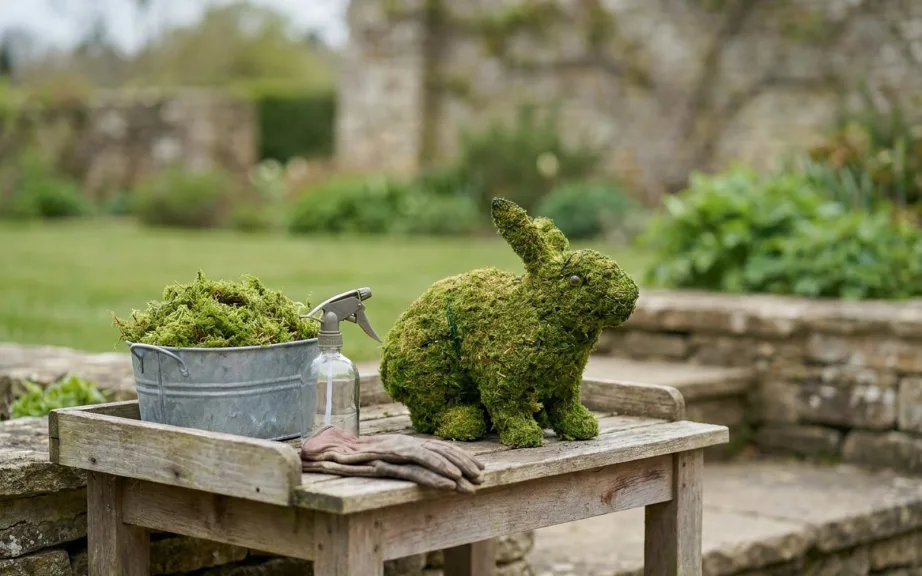
Moss on a frame is a growing medium. Left alone in the sun it browns and thins until the frame shows. Work fresh sphagnum in with the old once or twice a year, or plant into the moss within about six months so living plants hold it together. Press the moss: if it springs back, it can be saved, and if it crumbles, it needs re-mossing.
The full story is in how to take care of sphagnum moss on a topiary, and the technique is in how to add moss to a topiary frame. Browse our mossed animal topiary.
Preserved topiary
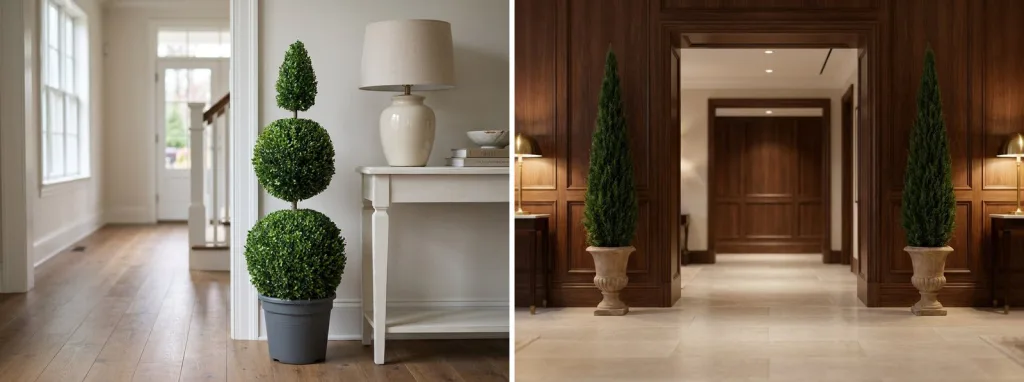
The rule: no water, no sun, no damp. A preserved piece is real foliage treated with glycerin, so it needs no water, no light and no feeding. Keep it indoors, away from sunny windows and humid rooms. Sun fades it unevenly, and damp breaks it down. Dust it now and then with a feather duster or canned air held a couple of inches away.
Kept that way, preserved boxwood lasts around seven years, and juniper seven years or more. See preserved topiary for interiors for where it works, and how preserved topiary is made. Shop preserved topiary.
Artificial topiary
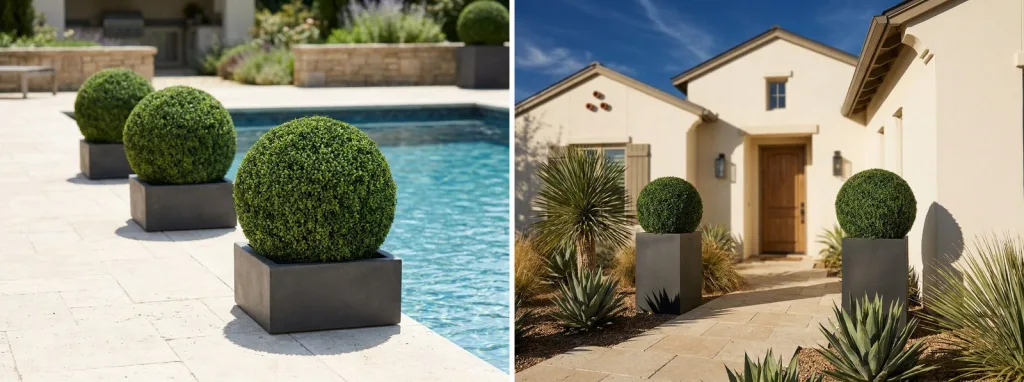
The rule: match the grade to the sun. For a spot with more than a few hours of direct sun, buy a UV-rated outdoor piece. Indoor-grade foliage fades and turns brittle outside. After that, care is light. Dust it, and a few times a year rinse it with a gentle hose spray or wipe it with a damp, soapy cloth, then let it air dry. A dull piece is very often dirty, not faded.
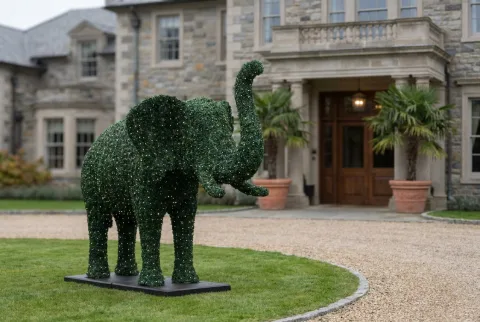
Cold does not hurt artificial foliage, but wind can tip a tall piece over. Weight the pot with sand or gravel and make sure it drains. Read how to keep artificial topiary from fading, how to plant artificial topiary in pots, and live, preserved or artificial if you are still choosing. Shop outdoor artificial topiary.
Topiary care through the year
| When | What to do |
|---|---|
| Early March | Feed live boxwood. Top up the mulch ring to one inch. |
| Spring | Refresh or plant into mossed pieces. Rinse artificial pieces after the pollen. |
| Early June | Main trim for live boxwood, once spring growth has firmed. |
| Summer | Water pots every day or two and mossed pieces as soon as they feel dry. Move preserved pieces out of any new sun. |
| Late summer | Light tidy trim for boxwood, finished by early September. |
| October | Second boxwood feed. Keep watering until the ground freezes. |
| Winter | No trimming. Wrap or move exposed pots. Knock heavy snow off wide artificial pieces. |
Quick answers
How often should I water a topiary?
It depends on the material. Live boxwood needs a deep watering when the top inch of soil is dry, about once a week in dry spells and more often in pots. Mossed pieces need water as soon as the moss feels dry. Preserved and artificial topiary need no water at all.
Why is my topiary turning brown?
On live boxwood, brown in summer usually means too little water, and bronze in winter is a reaction to cold sun and wind. On a mossed piece, brown moss means it has dried out and needs water and fresh moss. On preserved topiary, uneven fading means it is getting sun.
Can topiary live indoors?
Live boxwood cannot stay indoors for long, because it needs a cold winter rest and more light than a room gives. For an indoor spot, choose preserved or artificial topiary, which need no light.
Do topiary trees need full sun?
Live boxwood grows in sun or part shade, and in hot, humid areas it prefers afternoon shade. Mossed pieces want bright shade. Preserved topiary must stay out of sun. Artificial topiary can take full sun if it is a UV-rated grade.
Not sure? Ask our team
If something looks wrong, ask before the piece suffers. Send a photo and say where it stands through our contact page, or call 866-306-1020 and describe what you see. Our team replies within hours, usually the same day.