


Boxwood Care FAQ
General Information
Receiving Your Topiary
Be prepared when your live plant arrives. These are substantial, mature plants and can weigh between 65 and 80 pounds, shipped via UPS Ground. Once you unpack your plant, give it a deep, thorough watering to help it settle after transit. Most importantly, take a moment to read the care instruction card included with your order — it contains essential guidance for long‑term success.
Shipping Via UPS
Each plant is shipped in a custom‑designed box engineered to support the weight and size of these large specimens, ensuring they reach you safely and in excellent condition.
Pot Size
Measurements are taken from the soil line to the very top of the plant. When your boxwood arrives, it may have been grown either in the ground or in a pot. If you plan to keep it in a container, choose one that provides at least 3–4 inches of space on all sides to allow the roots to expand comfortably. Every order includes detailed planting and care instructions to help you get started.
Every boxwood we ship includes a care card with essential instructions. Think of this FAQ as the extended companion guide — a deeper dive into how to keep your plant healthy, vibrant, and beautifully shaped for years to come.
Pot Size
Measurements are taken from the soil line to the very top of the plant. When your boxwood arrives, it may have been grown either in the ground or in a pot. If you plan to keep it in a container, choose one that provides at least 3–4 inches of space on all sides to allow the roots to expand comfortably. Every order includes detailed planting and care instructions to help you get started.
Receiving Your Topiary
Be prepared when your live plant arrives. These are substantial, mature plants and can weigh between 65 and 80 pounds, shipped via UPS Ground. Once you unpack your plant, give it a deep, thorough watering to help it settle after transit. Most importantly, take a moment to read the care instruction card included with your order — it contains essential guidance for long‑term success.
Shipping Via UPS
Each plant is shipped in a custom‑designed box engineered to support the weight and size of these large specimens, ensuring they reach you safely and in excellent condition.
Containers, Planting & Location
Can I keep my boxwood in the vinyl container it arrived in?
The vinyl container is for temporary transport. Boxwood roots need room to expand, and keeping the plant in the shipping container will restrict growth and eventually stress the plant. For long‑term health, replant it either in the ground or in a larger pot with proper drainage. The sooner you transplant, the better the plant will establish.
If I grow my boxwood in a pot, does the pot need drainage holes?
Yes — drainage is non‑negotiable. Boxwood roots dislike sitting in waterlogged soil, which can lead to root rot and decline. Choose a pot with multiple drainage holes and avoid decorative outer pots that trap water unless you remove excess water promptly.
If planting in the ground, what location is best?
Boxwood thrives in full sun to partial shade. The ideal location offers:
- Morning sun with afternoon shade in hotter climates
- Well‑draining soil (amend clay soils with compost or grit)
- Good air circulation to reduce pest and disease pressure. Avoid low‑lying areas where water tends to pool.
Can boxwood be placed in direct sun?
Yes. Boxwood tolerates direct sun well, especially once established. In extremely hot regions, some afternoon shade can help prevent leaf scorch, but overall, sun exposure is not a problem.
If grown in a pot, should it be protected from harsh weather?
Container-grown plants are more vulnerable to temperature swings because their roots are above ground. If you live outside the recommended hardiness zone or experience severe winters:
- Wrap the pot and plant in burlap for insulation
- Move the pot into a garage, shed, or sheltered porch during extreme cold
- Return it outdoors when temperatures stabilize. This protects the root system from freeze damage.
How many years can a boxwood grow in a large pot?
With proper care, a boxwood can live in a large container for many years — even decades. The key factors are:
- Adequate drainage
- Occasional root pruning or repotting
- Consistent watering and fertilizing Container-grown boxwood often stays more compact, which many people prefer for topiary shapes.
Watering & General Care
How often should I water my boxwood?
Watering needs change as the plant establishes.
- Newly planted boxwood: Water deeply and consistently until roots grow beyond the original root ball. This may take several months.
- Established boxwood: Water when the top inch of soil feels dry. Avoid keeping the soil constantly wet — boxwood prefers slightly moist, not soggy, conditions.
- Container plants: Check more frequently, as pots dry out faster.
A good rule: Deep, infrequent watering is better than frequent, shallow watering.
Pruning & Shaping
How do I maintain the shape of a topiary?
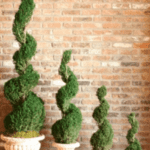
Topiary boxwood is surprisingly forgiving. Light trimming throughout the growing season helps maintain crisp lines and clean shapes. Think of it like giving the plant a haircut — it will grow back. Avoid removing too much at once; frequent small trims produce the best results.
What time of year should I prune my boxwood?
We prune year‑round, but the main shaping period typically begins in early June, once the spring flush of growth has hardened. Light touch‑ups can be done anytime. Avoid heavy pruning right before winter, as tender new growth may be damaged by frost.
What tools should I use to prune my boxwood?
Use sharp, clean shears. Dull blades tear leaves and stems, which can lead to browning. For topiary work, many people prefer:
- Hand shears for precision
- Hedge shears for larger surfaces
- Small snips for detail work
Fertilizing
How often should I fertilize my boxwood?
A simple schedule works well:
- Early March: Apply a granular, balanced fertilizer as a top dressing
- September (optional): A second light feeding if the plant needs a boost. Avoid fertilizing late in the fall, as new growth may not harden before winter.
What fertilizer should I use?
A balanced granular fertilizer such as 10‑10‑10 or 14‑14‑14 works beautifully. Spread it evenly around the base and water thoroughly. For plants that look stressed or need quick recovery, a liquid fertilizer can provide a fast-acting boost.
Plant Age
How old is my boxwood?
Depending on the size you purchased, your plant is typically 5 to 10 years old. Boxwood grows slowly, which is part of what makes mature topiary so valuable.
Troubleshooting & Common Problems
My boxwood is turning brown and dropping leaves. What’s wrong?
This usually indicates a watering or drainage issue.
- Overwatering can suffocate roots
- Underwatering can cause stress and leaf drop
- Poor drainage is a common culprit in pots. Check soil moisture and adjust your routine. Improving drainage often solves the problem.
My boxwood leaves are turning orange. What should I do?
Orange or bronze foliage often signals nutrient deficiency or stress.
- Apply a balanced fertilizer
- Consider a liquid feed for quicker results
- Check watering habits and soil condition. Most plants recover well once the underlying issue is corrected.
My boxwood leaves have scratch marks. What causes this?
This is typically mite damage. Mites feed on leaf surfaces, leaving tiny scratch-like marks. Treat with:
- A miticide
- Insecticidal soap
- Horticultural oil. Your local nursery can recommend the best product for your region.
The tips of my boxwood leaves are curled tightly. What’s causing this?
This is a classic sign of psyllid, a small insect that causes the newest leaves to cup or curl. If you gently uncurl a leaf, you may find a tiny larva inside. Recommended steps:
- Prune off affected tips
- Dispose of them (or burn them if allowed)
- Treat with an appropriate insecticide
There are blisters on the underside of my boxwood leaves. What does that mean?
This is usually a leaf miner, a pest that tunnels inside the leaf tissue. Infested leaves often blister or bubble. Leaf miner can be persistent, and in severe cases, removing and destroying heavily infested plants may be the most effective long‑term solution.